Topanga: Under an Oak, Beyond the City
LOS ANGELES, 2026
A Wunderkammer of California Light, Cappuccino Rituals, and Los Angeles Wildlife
Seven years ago, we left for Los Angeles with a dog-shaped absence where James had been. He died the day before our departure: a car and the particular cruelty of bad timing. On the Lufthansa flight, an attendant crouched beside us somewhere over the Atlantic, trying to understand. I showed her my phone's homescreen. She didn't need anything more explained.
Mr. Watson was conceived the night James died. He is here now, in Topanga, asleep under the oak. We are not sure whether this counts as return or continuation.
Five weeks. Remote work from the quiet hills, Los Angeles within forty minutes when the city calls. The curse, if it was one, seems to have dissolved somewhere beneath this tree.
Every home deserves a tree.
Not the scrawny, shop-bought thing chosen on impulse at a garden center somewhere out of town, then brought home at thirty kilometers per hour through the car's sunroof on a Sunday morning left too empty after the night’s dinner-table truths had begun to lose their conviction. Nocturnal wisdom rarely survives daylight. It rises, softens, and disappears, like the marine layer above the beaches of Southern California.
No, a real tree.
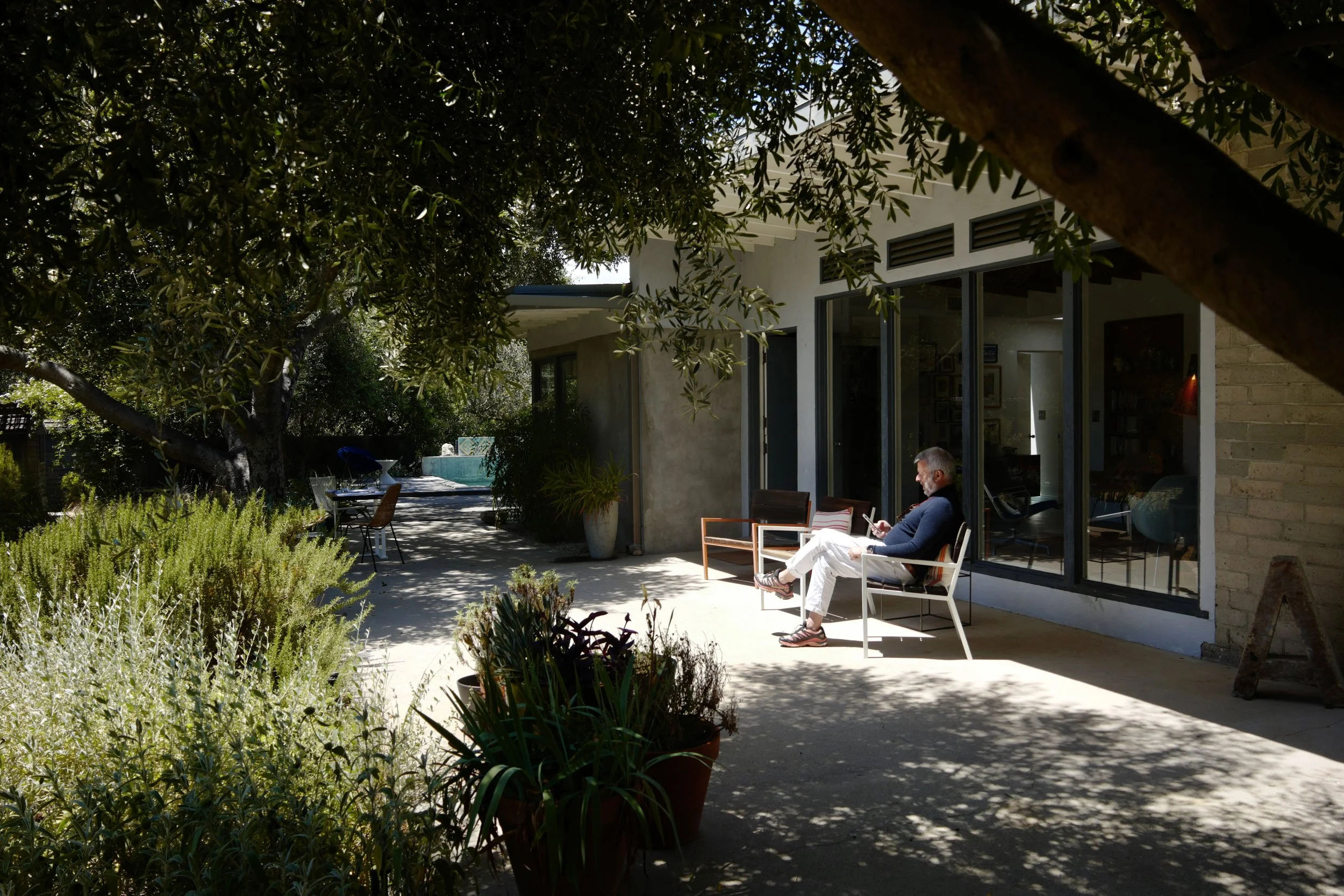
One that has outgrown the house and stands over it with the authority of age. More protection than threat. More ancestor than ornament. The kind of tree that makes the building beneath it appear provisional, as if the house built there has been permitted to linger in its shade.
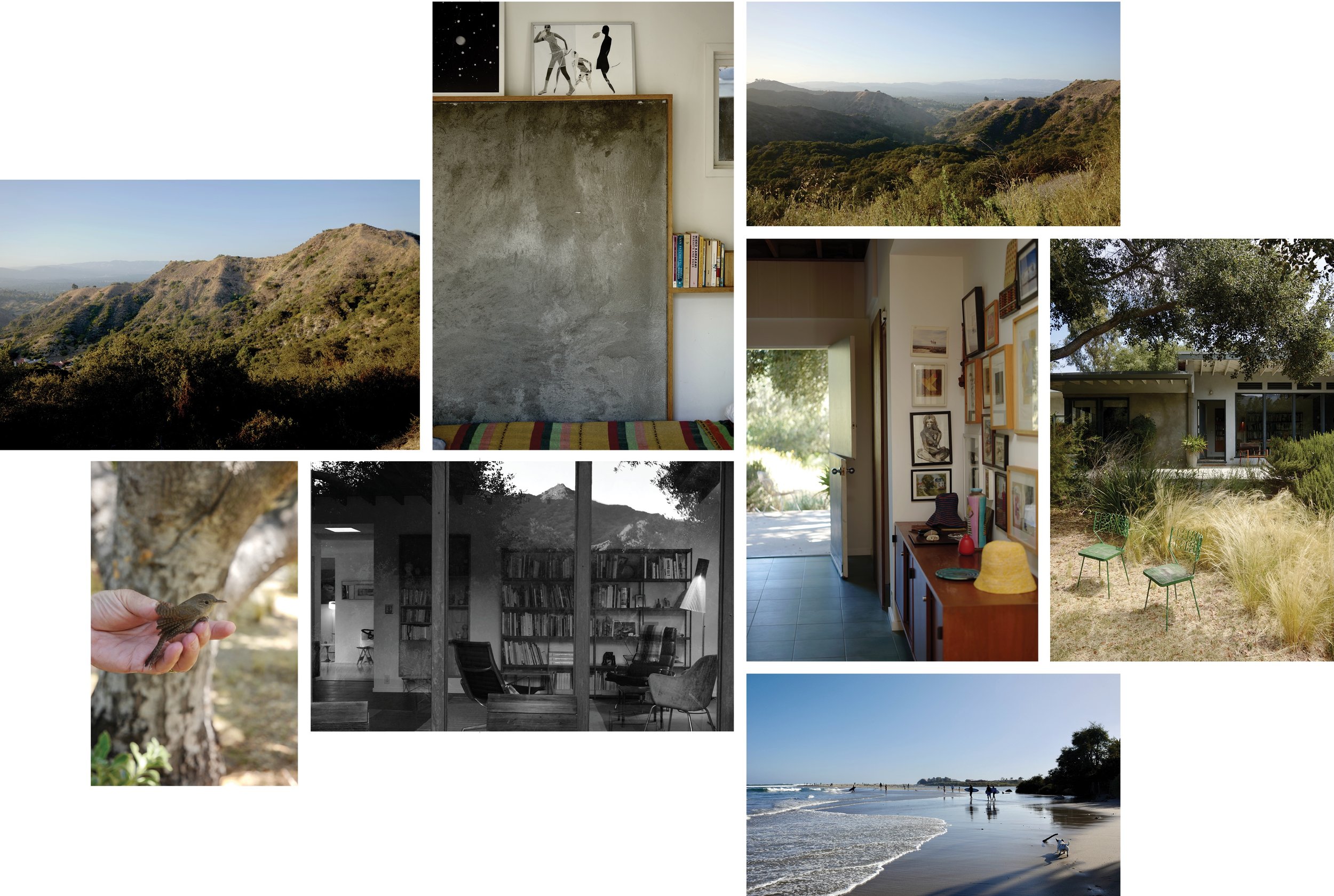
Ours is a three-stemmed California oak.
Its massive canopy throws a Pollock across the front deck as soon as the sun comes out. In the pool, the yellow doughnut float matches the color of its oak galls, while the green one glistens with the same intensity as its leaves. Life inside a Hockney, with a bigger splash. And with gophers in the lawn.
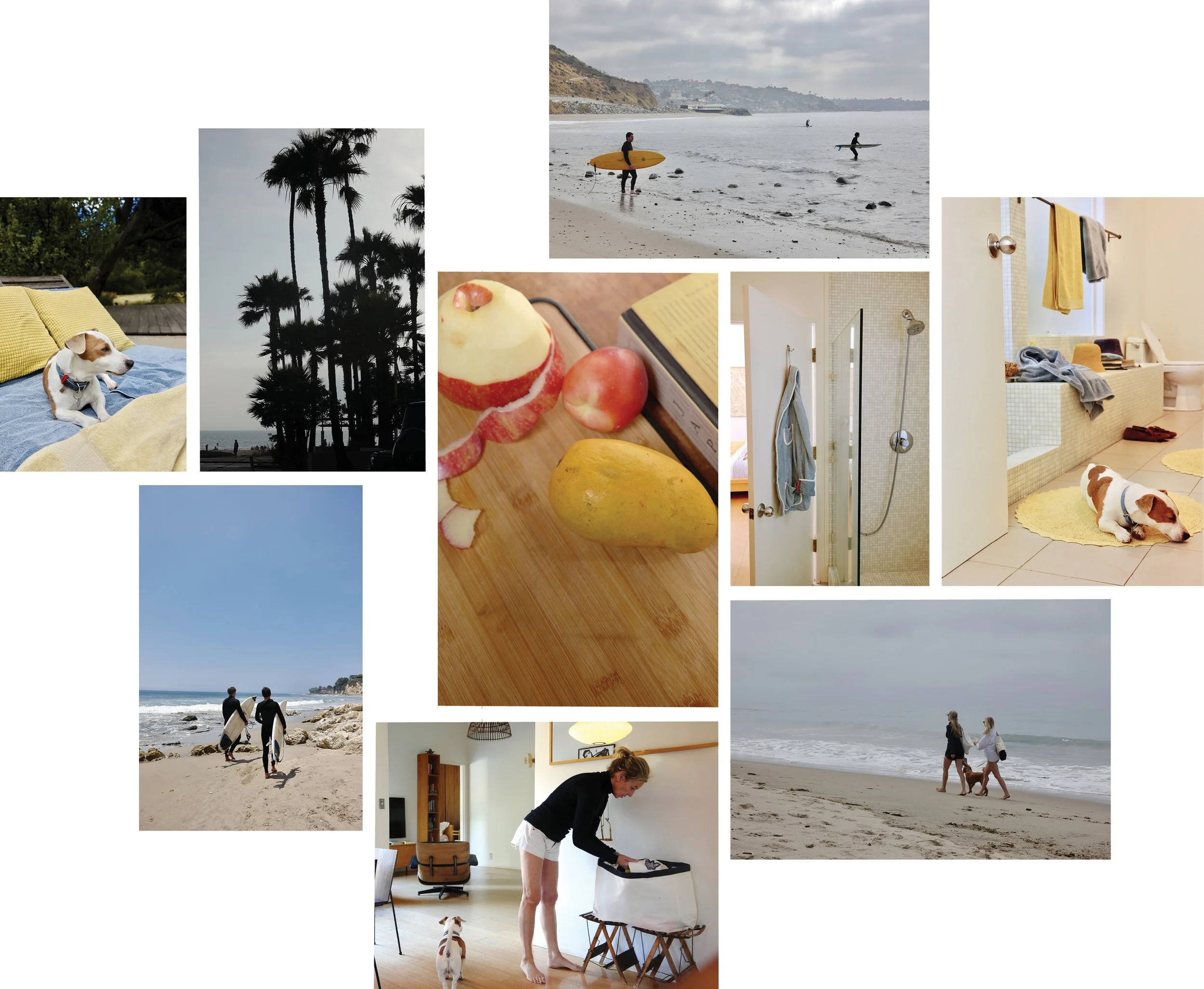
Size matters in the USA. Money has a measuring tape; small houses live nervously. The canal cottages in Venice, Los Angeles, are torn down and replaced by multimillion-dollar fake-rustic homes with triple garages and hardly enough garden space to walk around two abreast. Malibu seafront homes look more like showrooms than living spaces. They are overwritten by the personalities of the interior designers and art advisors. Taste can be bought at almost any budget, provided the budget is large enough.
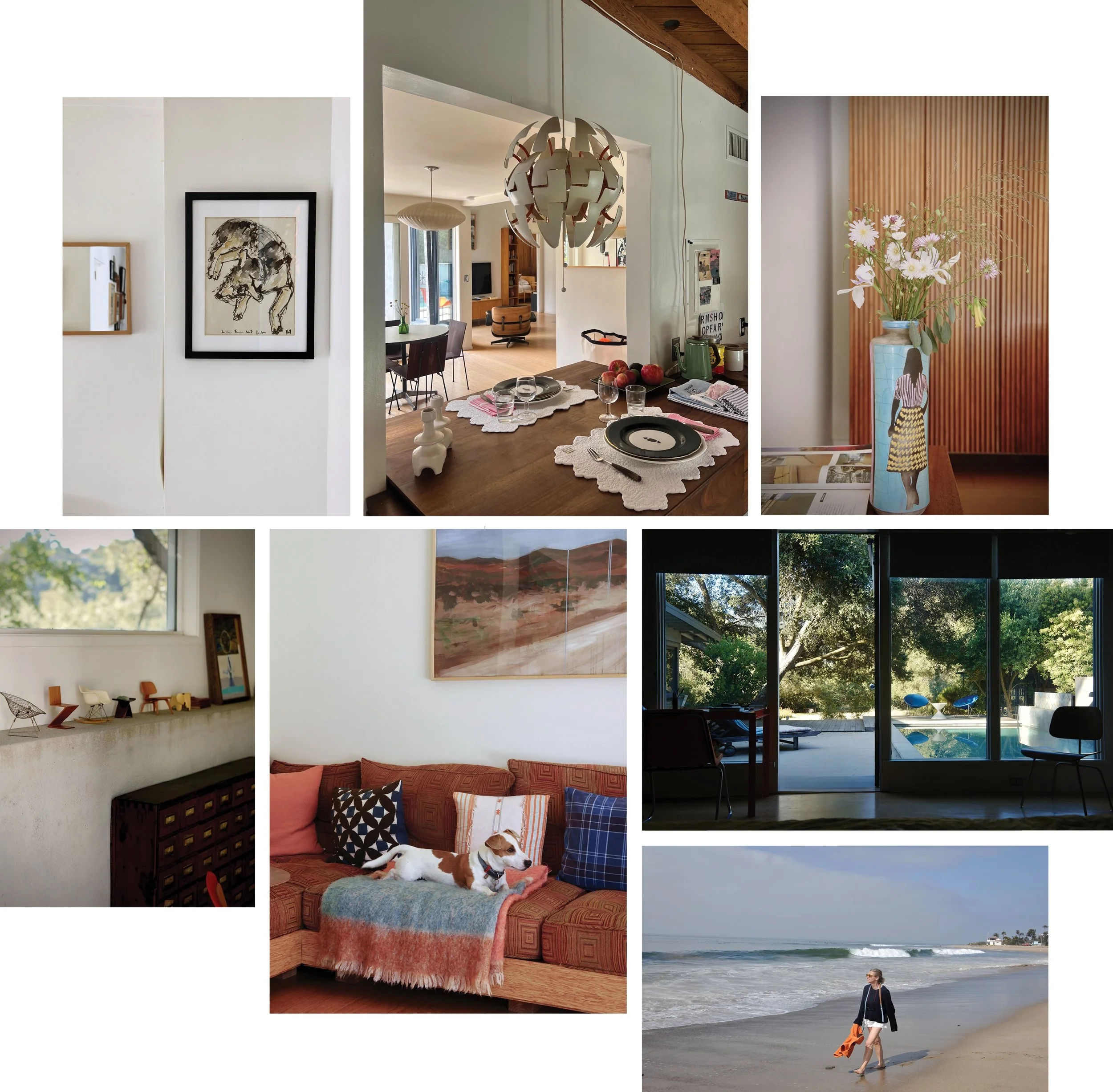
In Topanga, the house fits the tree: a wunderkammer. Not an exhibition hall.
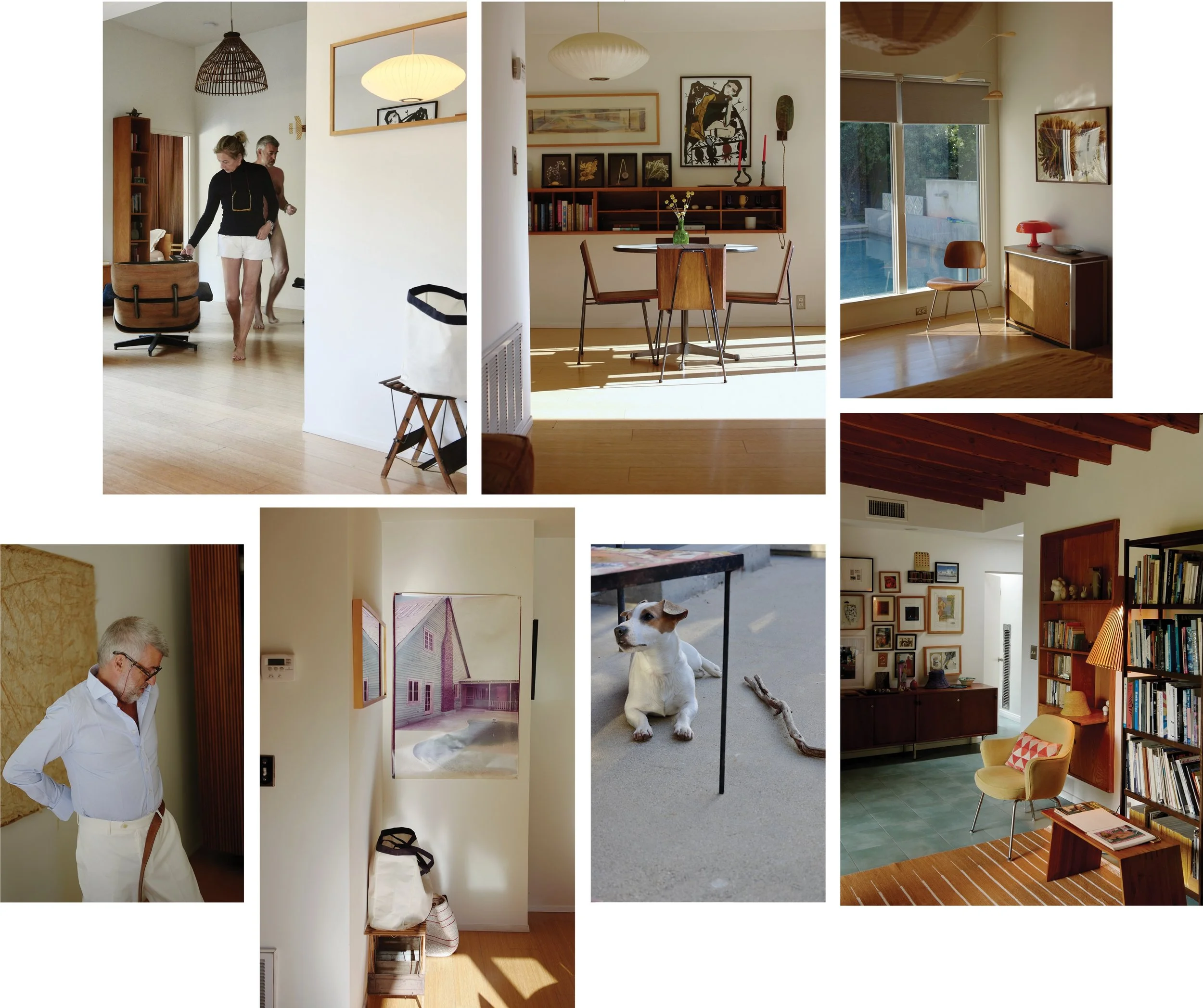
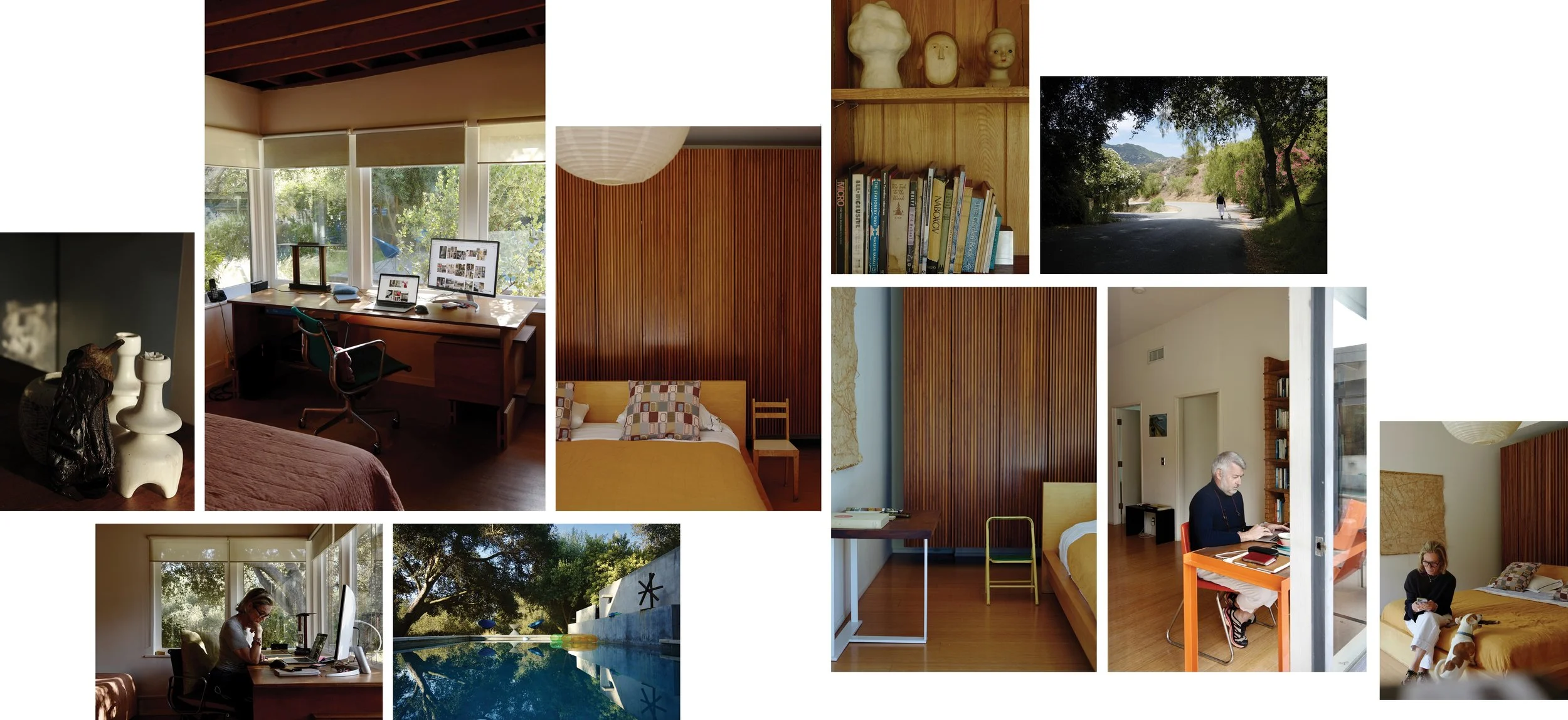
A hideout filled with trouvailles. Vintage furniture is scattered throughout the house: some classics, some local finds, all time-worn into an aesthetic that newness never meets. On the walls hangs a mismatched collection of photographs, collages, paintings, and prints that make perfect sense, curated by emotion and beauty rather than logic. The bungalow has the proper overhangs, architectural courtesies that allow the right amount of California light to enter without overstating itself. It is a house that seems to have grown over the years, becoming more intimate because of it. Here, size is not measured in square feet but in spaciousness, proportion, and ease of use.
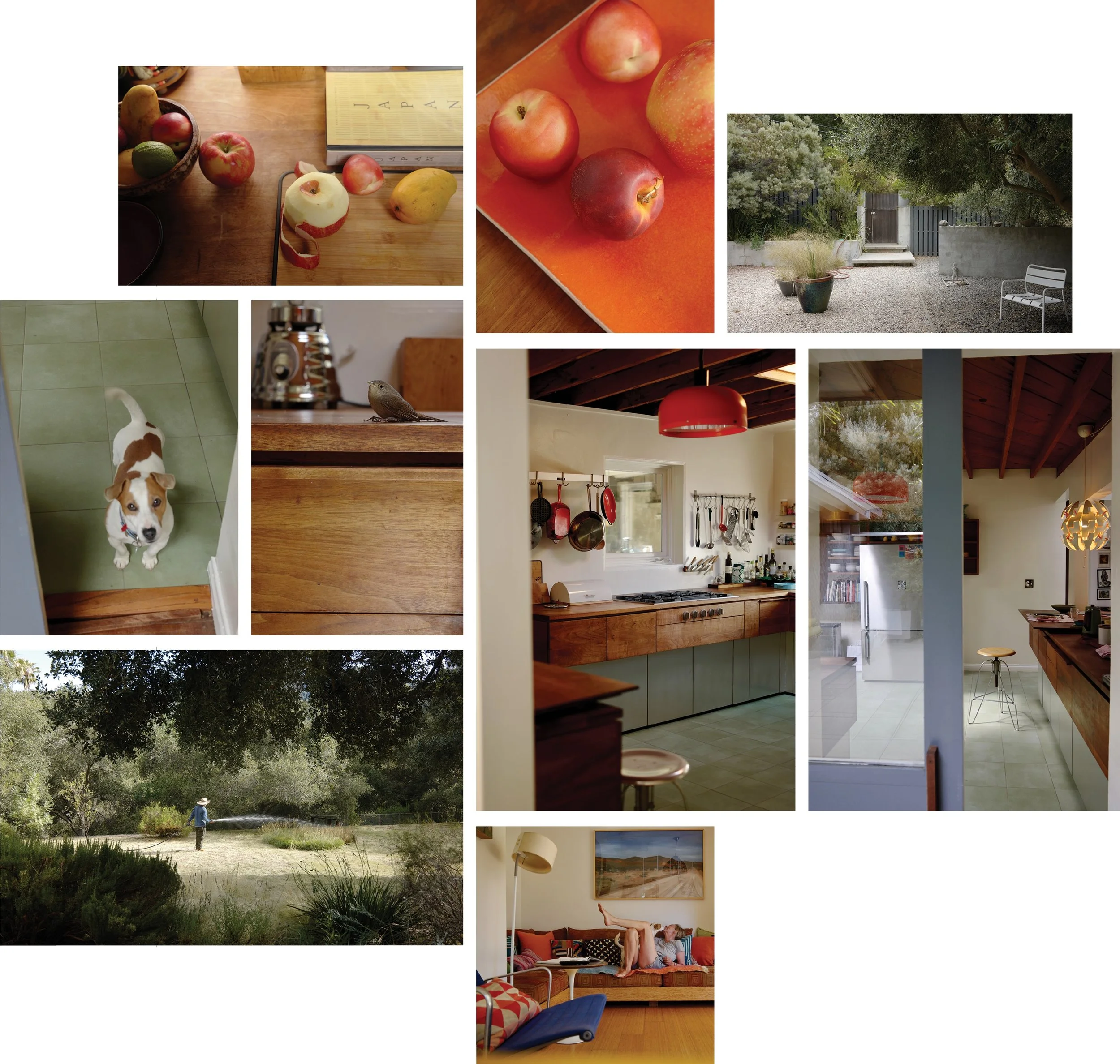
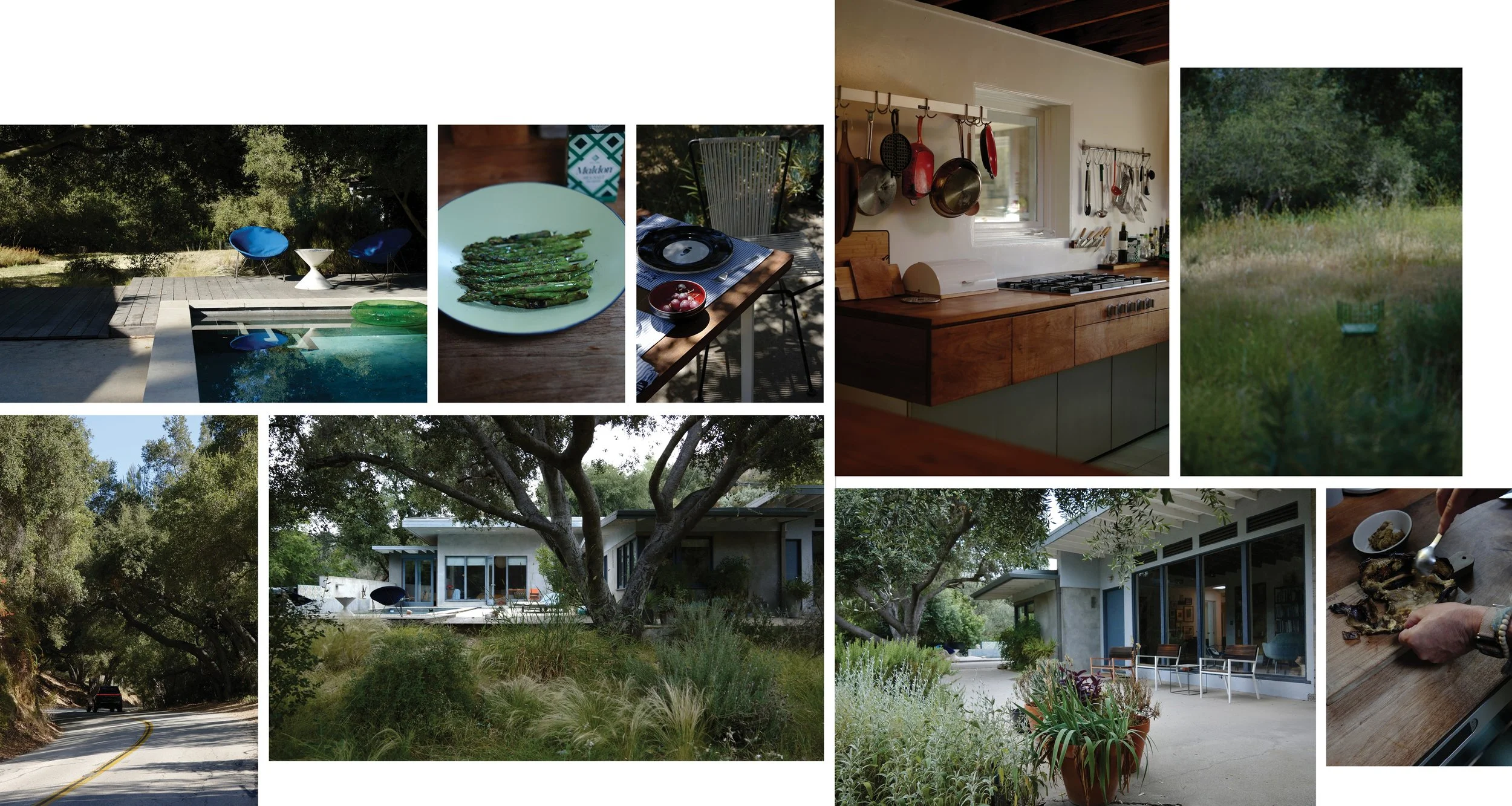
And a kitchen that has the temperament of a stubborn creator. We keep looking for the handles on the aluminum-clad lower cupboards. They are not there. There were no buttons on the first iPhone either. Sometimes efficiency gives way to design. A kitchen where gastronomy comes with squats. Made for serious cooking; filled with ingredients, utensils, and recipe books.
Gaggia and I have a passionate relationship. Every morning, first thing, in the kitchen.
It is a painfully complicated affair, capable of producing either pure delight or outright frustration. Gaggia is the espresso machine, a gleaming stainless-steel cube that dominates a corner of the kitchen and most of my early mornings. She demands Swiss precision but reacts with Italian caprice. Making a cappuccino has become a ritual of grinding, tamping, waiting, listening, adjusting, and hoping, a small domestic ceremony that is every so often interrupted by one of the many flashing lights in her repertoire. For no reason whatsoever, she rejects me, refuses service, and forces me back to the French press.
Even in California, the day starts better with a cappuccino.
The Cooper's hawk announces its arrival with sharp shrieks before settling on the second large branch of the California oak in front of the bedroom, its flight precise and effortless, its black-and-white striped tail lowered as it lands. Statuesque. It sits there overlooking the lawn with its many gopher holes, entirely uninterested in anything subterranean, canine, or human. Whatever defies gravity, beware. But nothing moves under the canopy—a bird composed in all its splendor, armed, alert, and temporarily useless.
Or so it seems.
There is a loud thud against the dining room window. A white-breasted nuthatch lies at the foot of the pane, stunned into stillness. I pick it up and place it on its side in the palm of my hand: twenty grams of wild matter, still warm, already departing. Its black eye, the size of a mustard seed, carries the wisdom of acceptance. It knows I know. A feeble eek-eek-eek escapes as its body goes limp.
The hawk has left. The threat remains.
I nearly drop the coffee cups during my morning cappuccino ritual when I notice the gnatcatcher on the kitchen sink. It watches every action in my carefully orchestrated Gaggia courtship routine and must have decided that any human so devoted to producing a perfect coffee cannot be a hunter. I catch it easily and hold it gently until I feel its heartbeat settle. It holds on to my index finger when I take it outside, unwilling to let go. For one ridiculous moment, I start to feel like Saint Francis in Topanga.
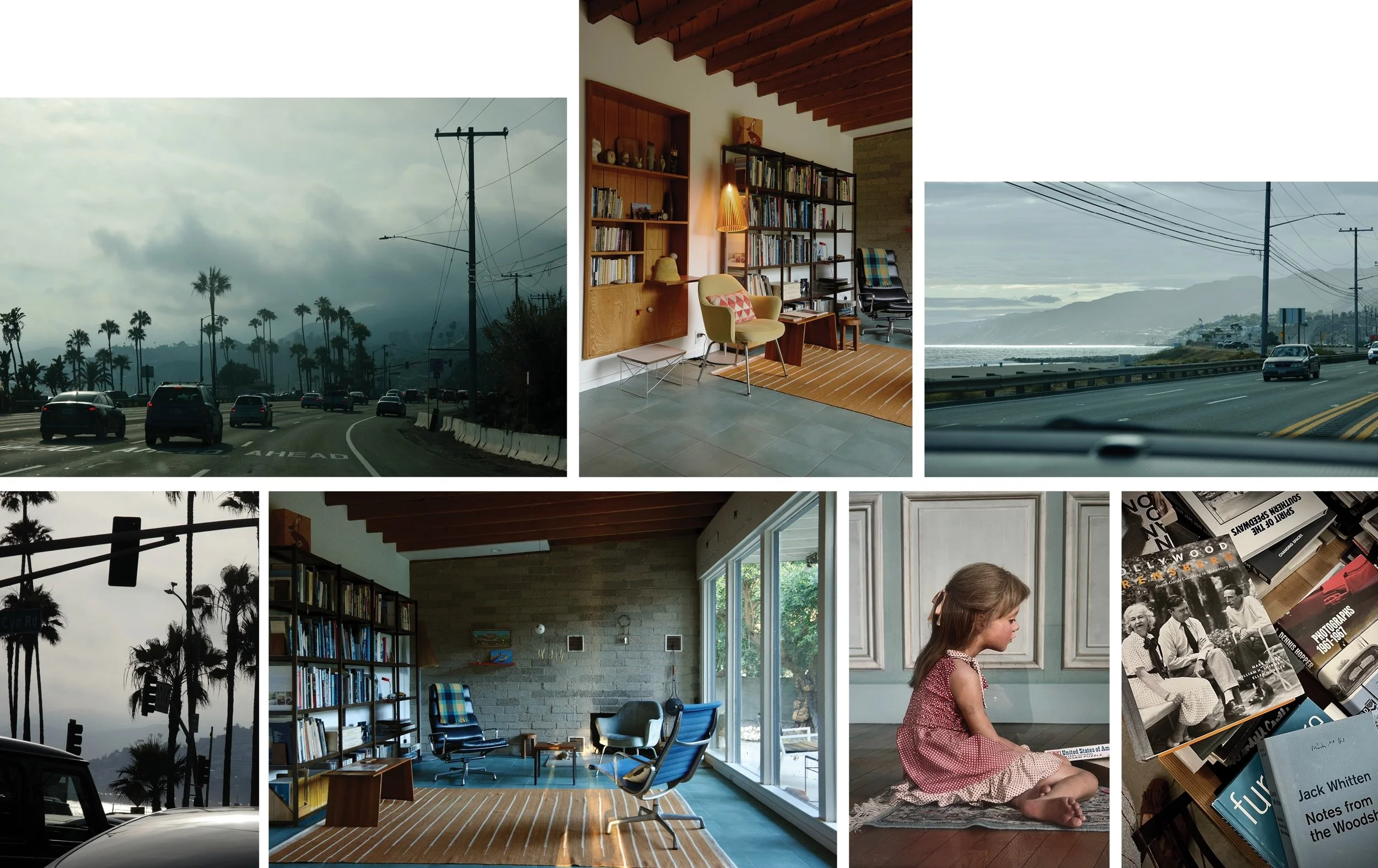
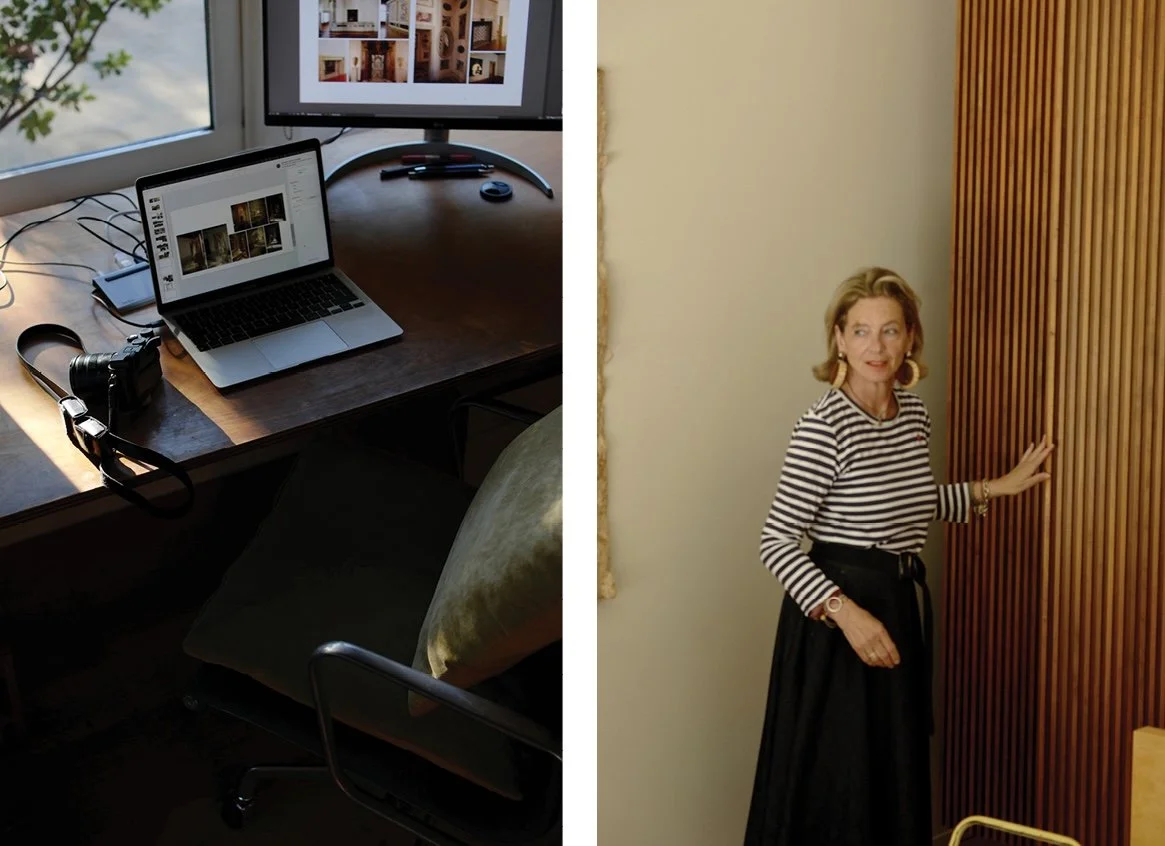
We are halfway through our stay, and this house has already drawn us in. We have become as much part of the wunderkammer as the squeaky Eames, the kitschy French portrait above the desk I'm typing this on, and the eclectic mix of French and English books I keep pretending I will find time to read.
The tree approves: we doze beneath its branches, drink coffee in its shadow, and rescue birds from its invisible borders. The gnatcatcher held on longer than it should have. So will we.
Subscribe to get full access to the newsletter and publication archives.
The property is available for rent directly from its owner. For enquiries, contact vero@verana.com.