VENICE, 2026
Amid pavilions, queues, spectacle, and managed meaning, the strongest exhibitions ask for attention.
Ninety euros. Cash. No card.
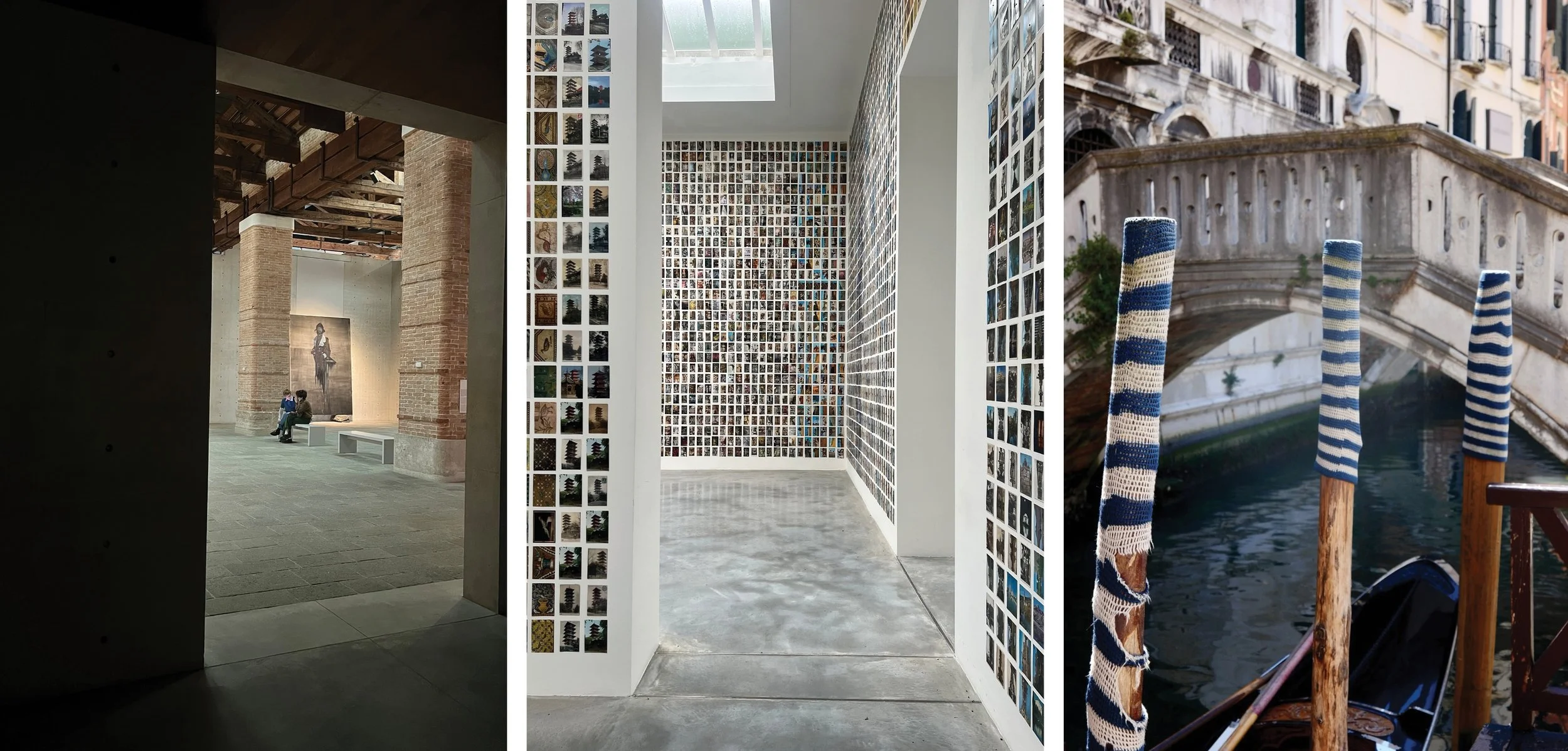
The gondoliere’s accent is thick. The tourist’s is thicker. But money talks, especially in Venice. The couple climb in unsteadily. She is dressed for the occasion. He behaves as if he has done this all his life. The gondola is released from the paline and slips into the narrow canal beside Palazzo Querini Stampalia. The mooring poles wear blue-and-white crocheted sleeves, matching the gondoliere’s sweater.
On Campo Santa Maria Formosa, Davide Rivalta’s lions observe the spectacle with perfect indifference.
It is the sixth day of the 2026 Venice Biennale. Man has created art. Venice has added theater, exposure, and a price.
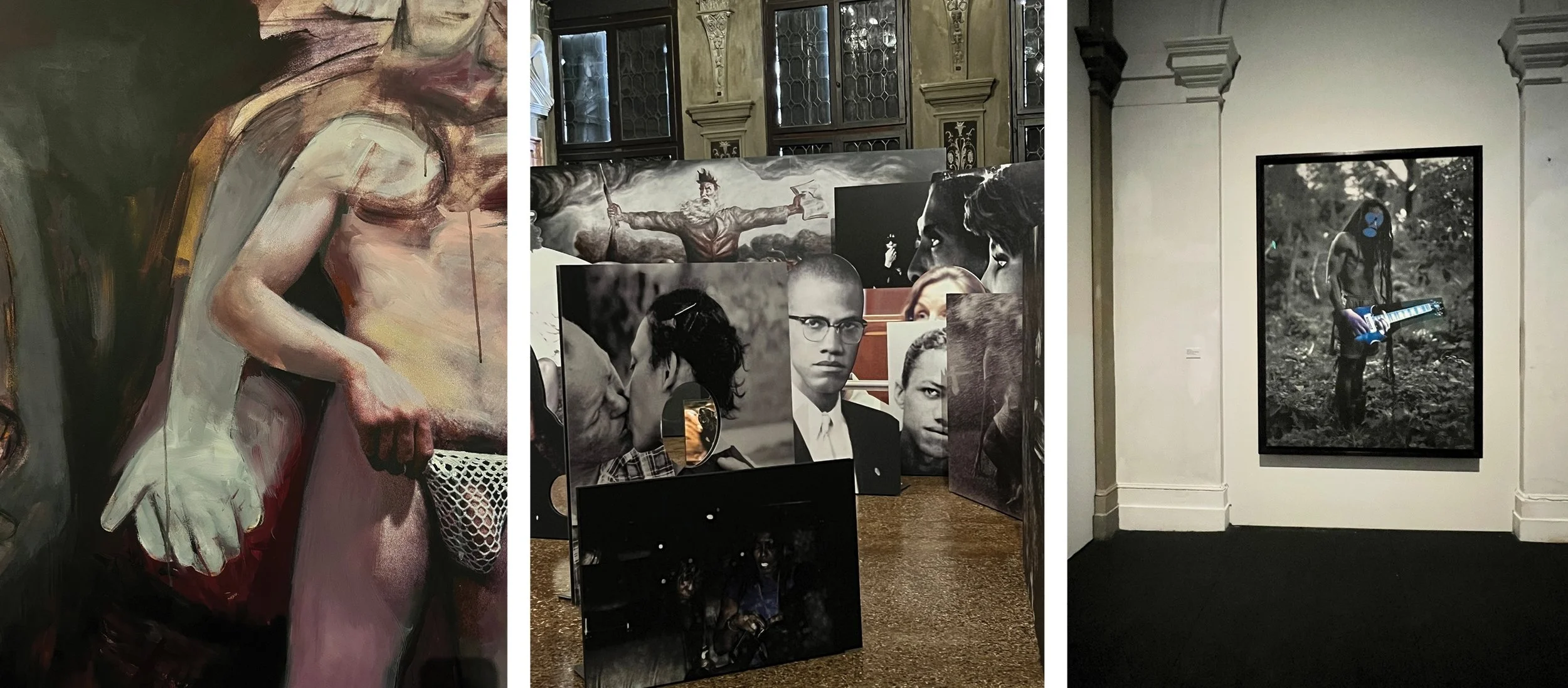
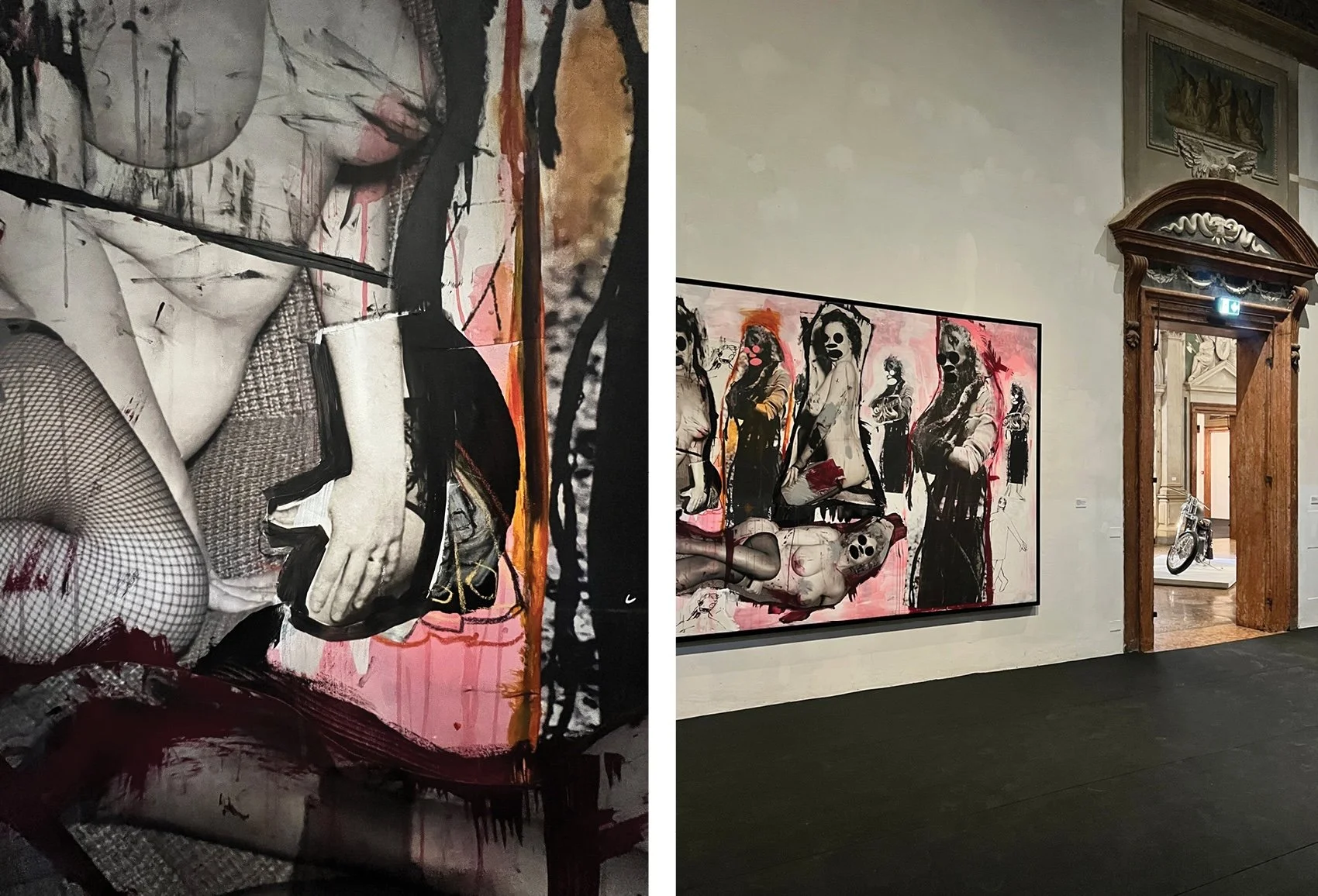
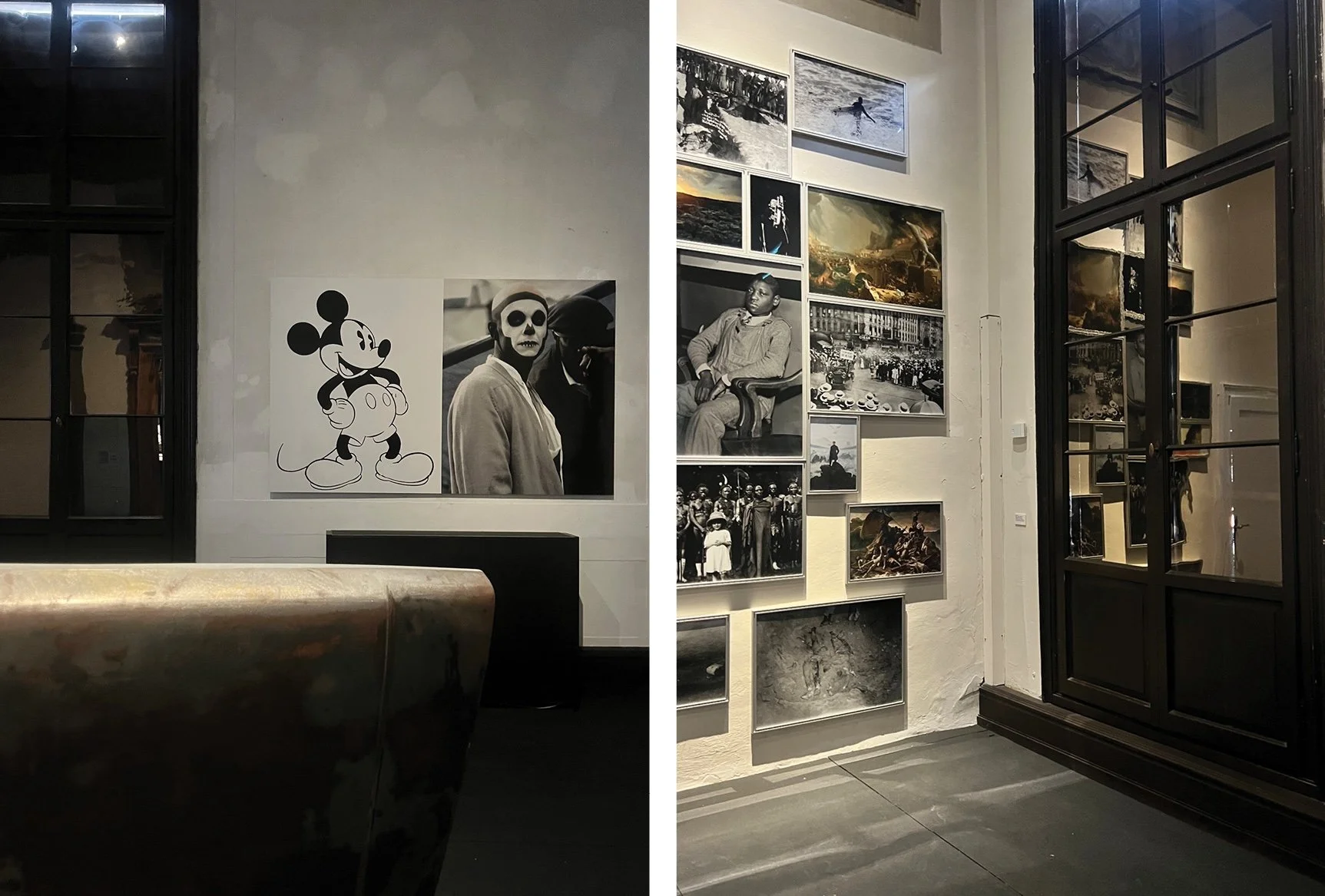
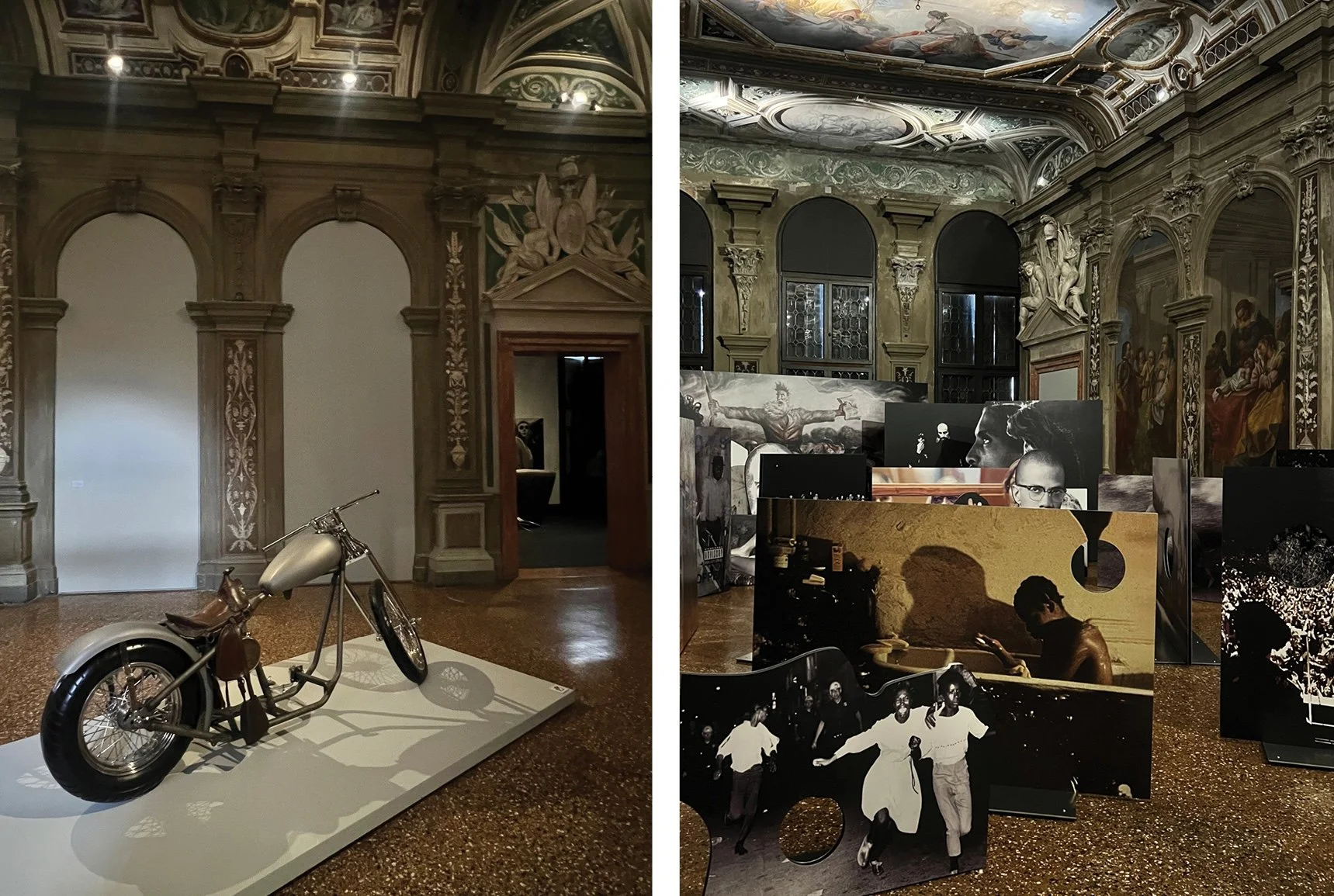
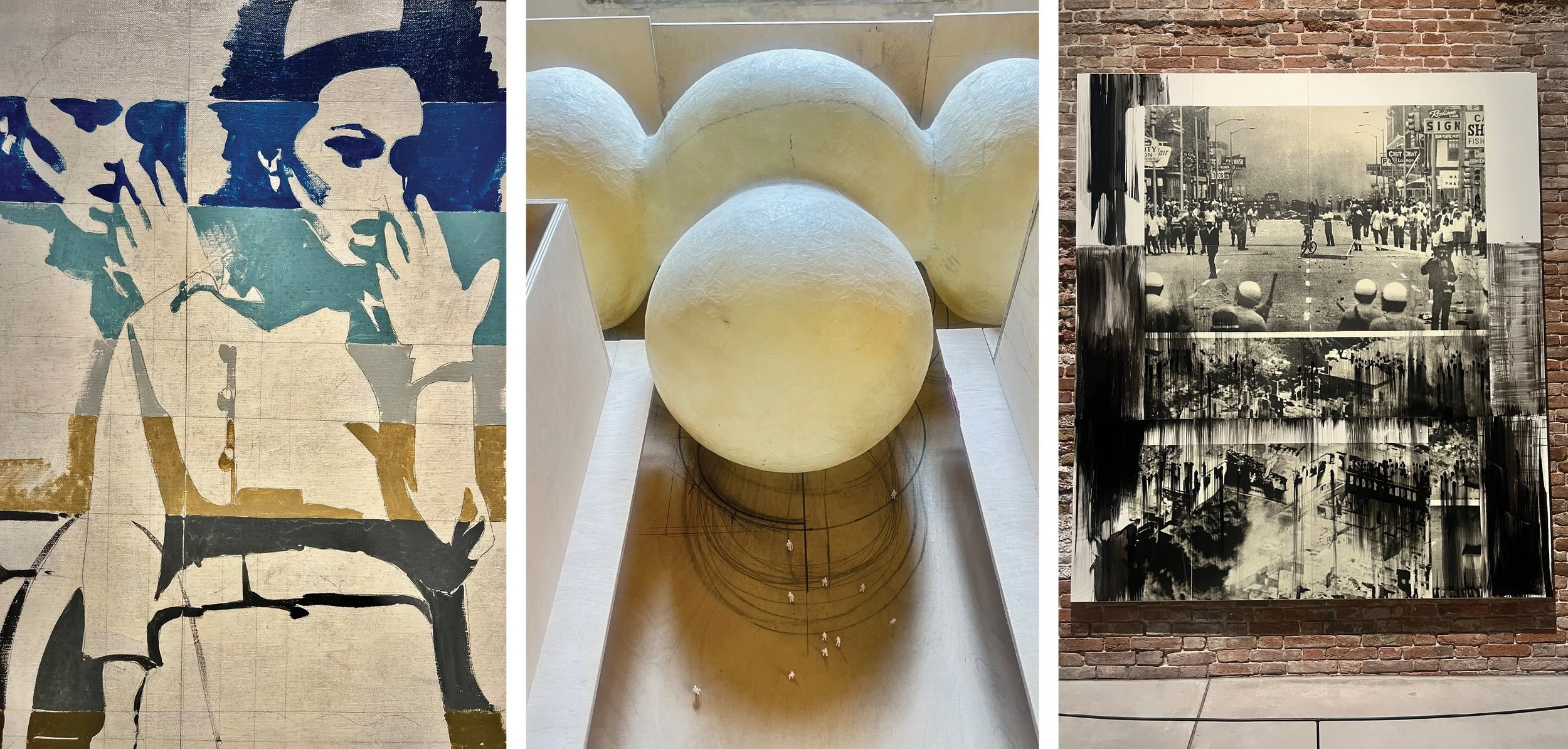
“Helter Skelter” exhibition views, Fondazione Prada
Florentina Holzinger’s SEAWORLD VENICE has become the Biennale’s most reliable rumor. A queue stretches towards the Egyptian Pavilion for nude aquatic performances and the promise of scandal. “Shocking” is the word everyone reaches for, as if Venice had not been rehearsing spectacles for centuries. I see a line of gawkers and a bell chiming from a blue mobile crane with an upside-down nude woman as its clapper. It is Instagrammable. Even more so when photography is forbidden.
But at the Japan Pavilion, Ei Arakawa-Nash’s Grass Babies, Moon Babies turns the visitor into art. They pick up an eleven-pound doll—the approximate weight of a four-month-old—and carry it through the exhibition. Instantly, they become caregivers. Instinct takes over from uncertainty. An older man watches a video, holding the doll with a tenderness reserved for a grandchild. Three young men advise a fourth on how to change a diaper. It is surreal. The fiction is crude. The response is deeply human. In today's world, the artificial no longer imitates reality; it choreographs it.
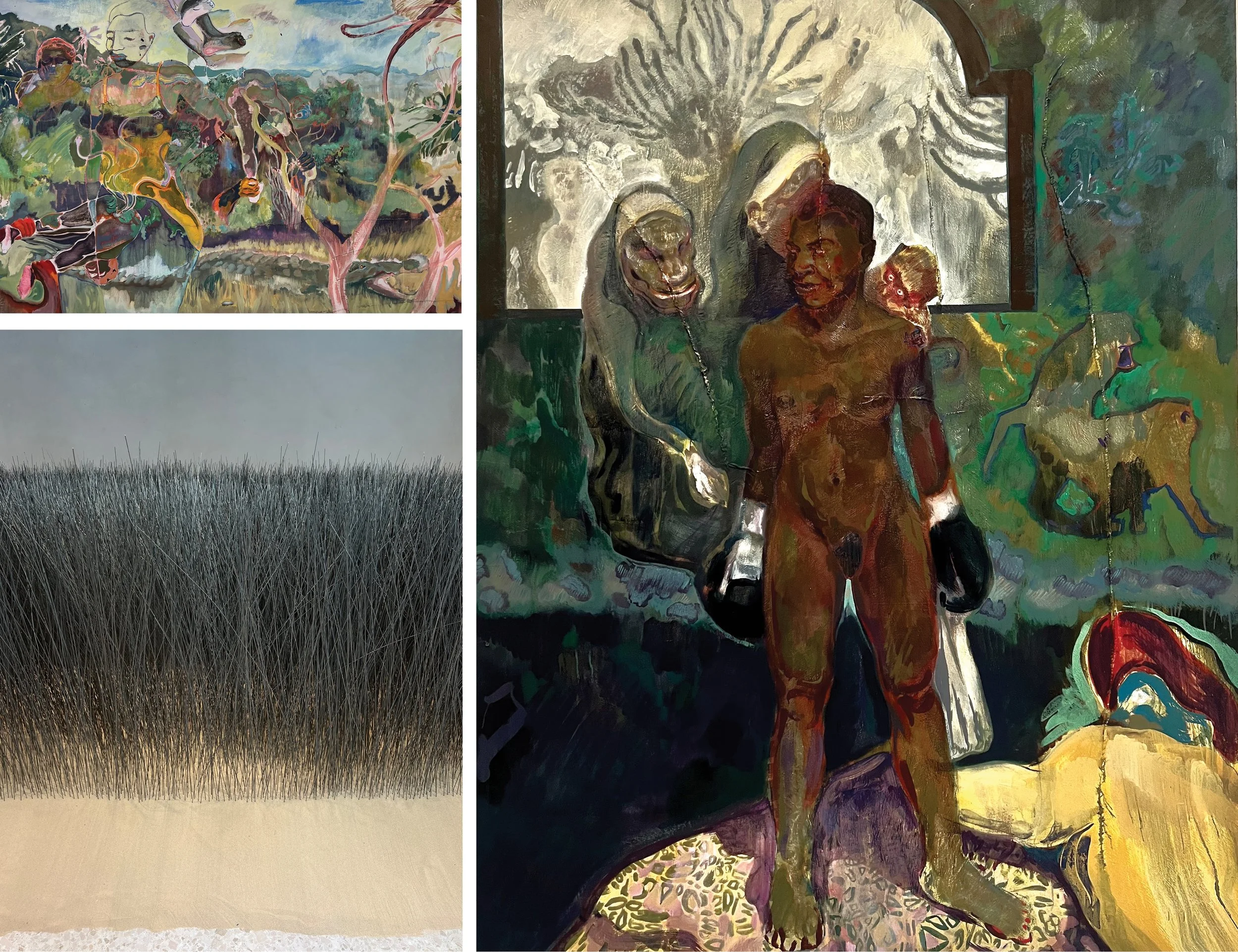
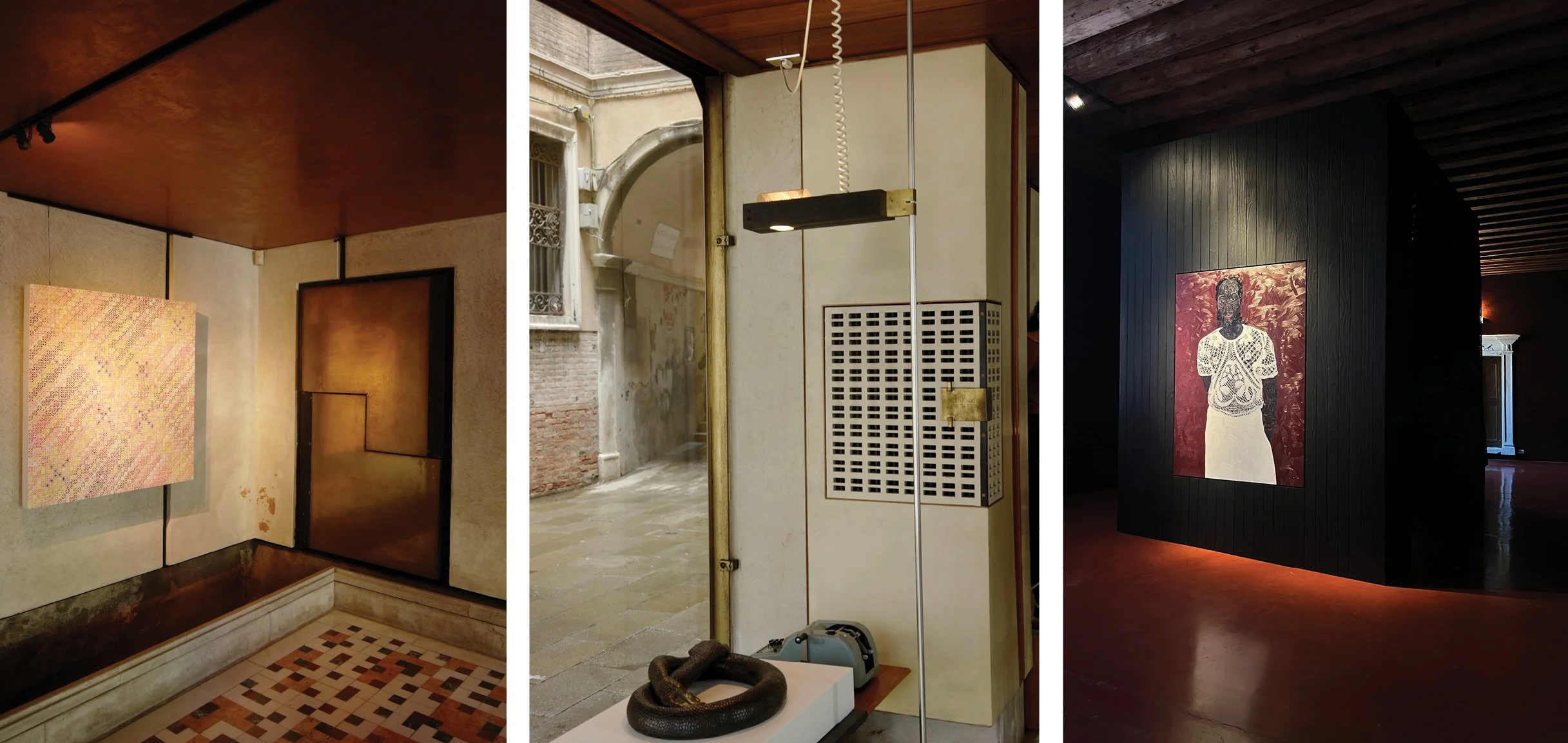
Michael Armitage and Lee Ufan
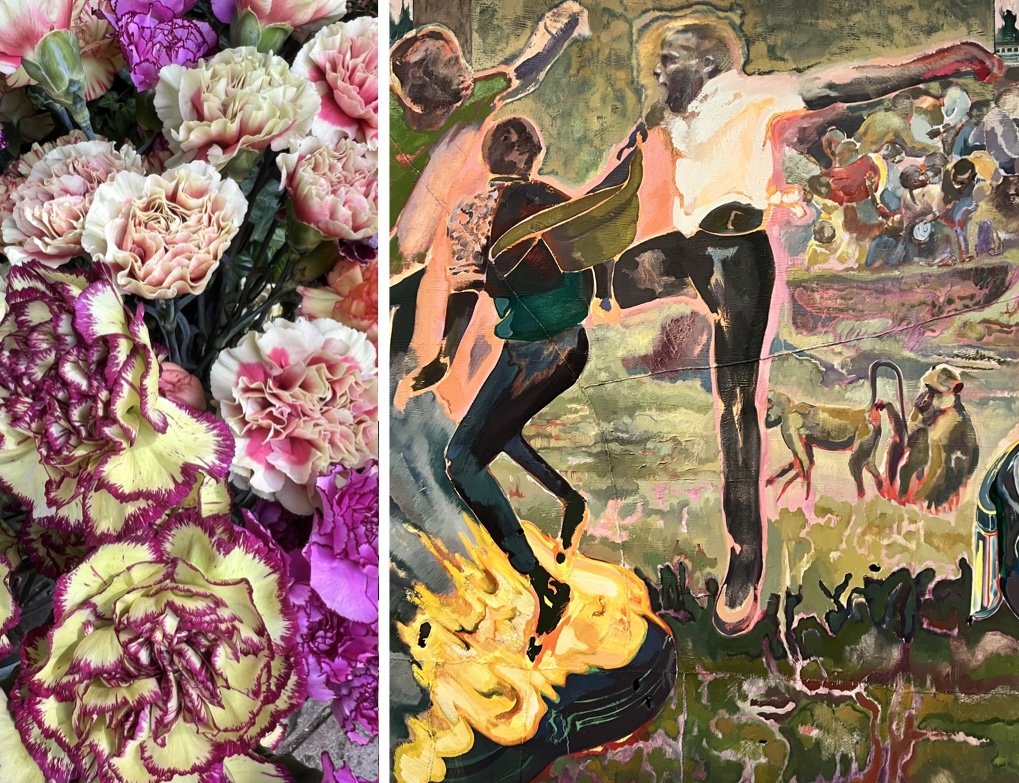
Too much art makes art dull. The curated sections of the Biennale often mistake accumulation for generosity. One underheard voice is placed beside another, then another, until difference itself becomes noise. Works that might carry force in solitude are made to compete by proximity. For some artists, selection begins to look less like recognition than punishment.
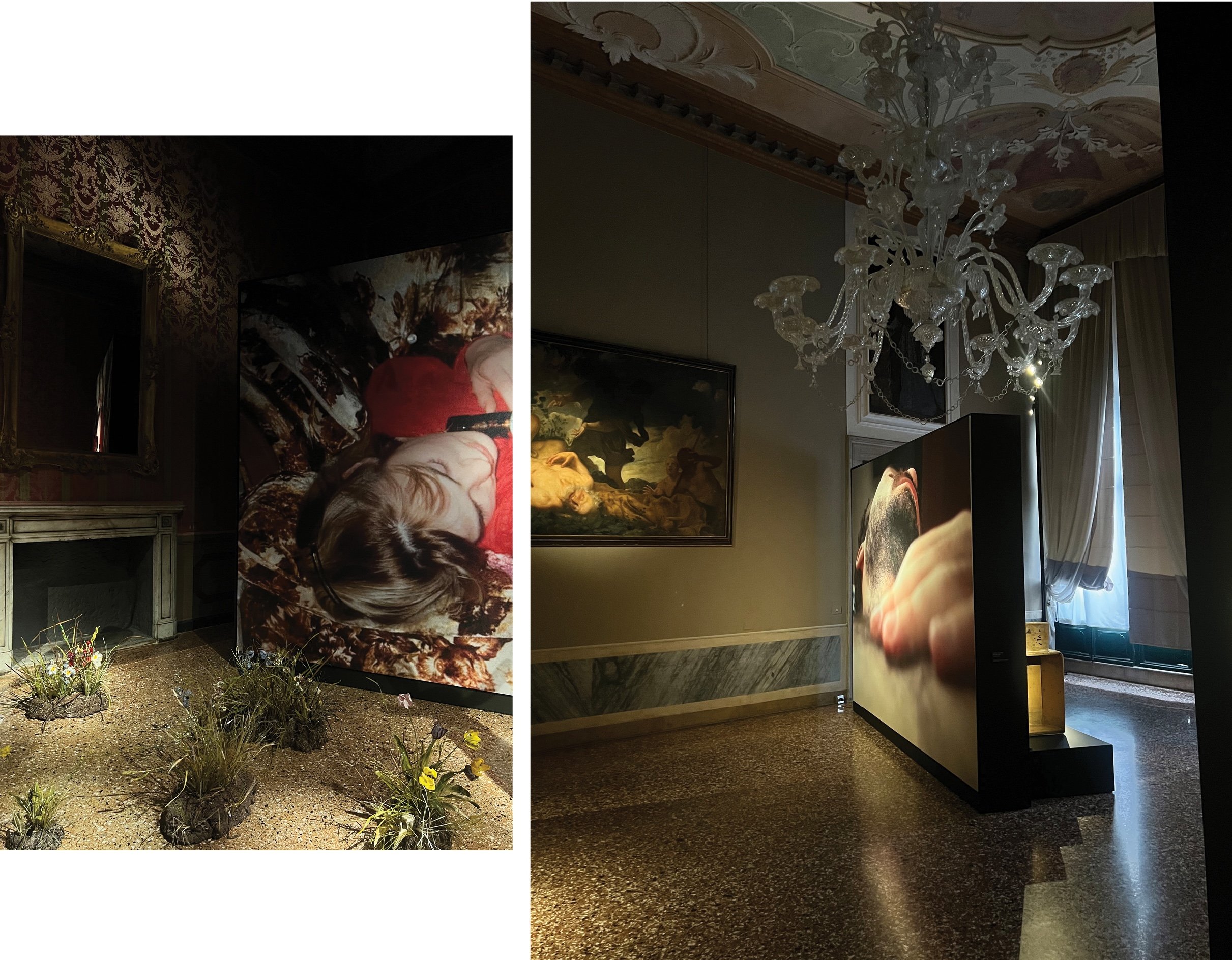
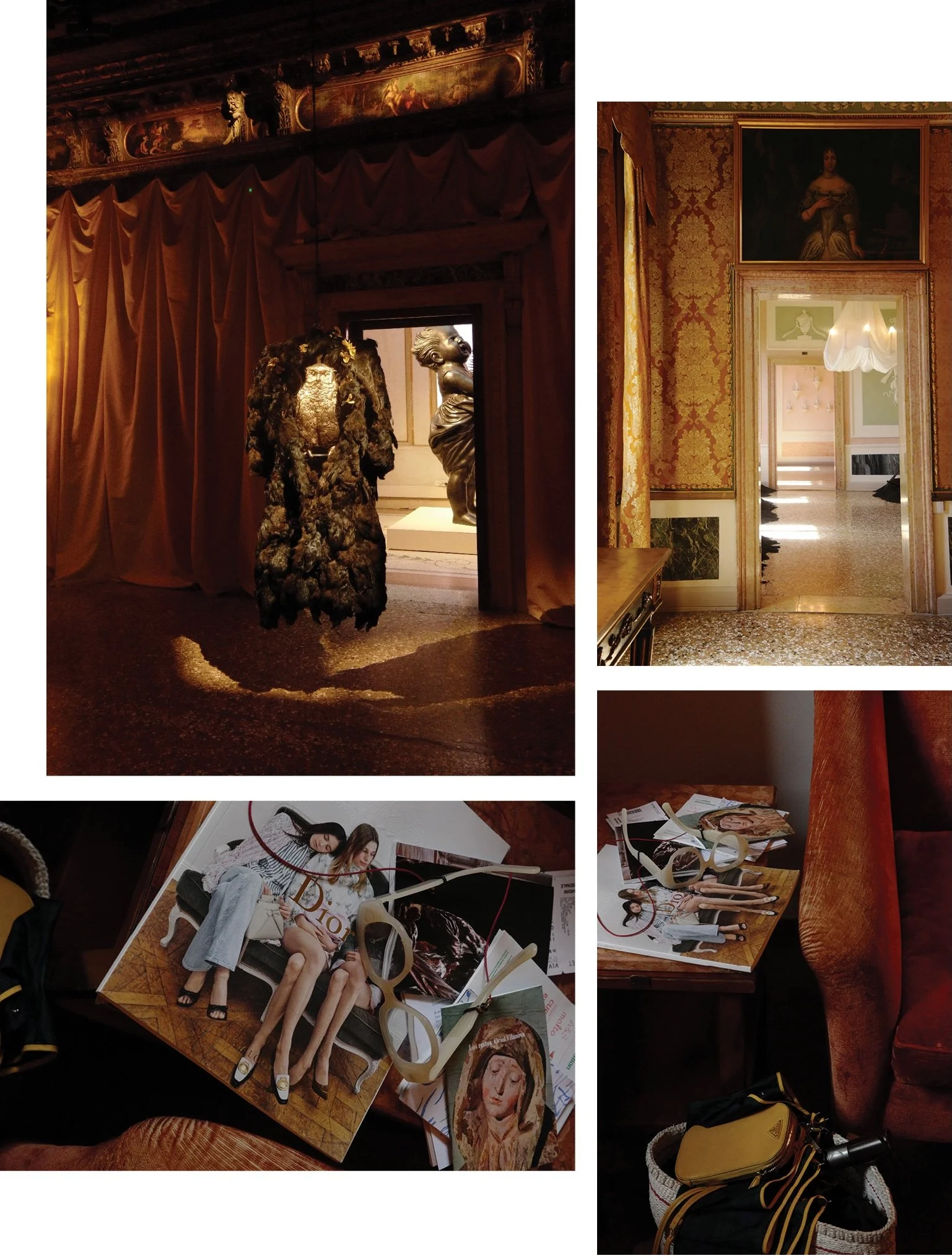
Dries Van Noten “The Only True Protest Is Beauty” exhibitions views
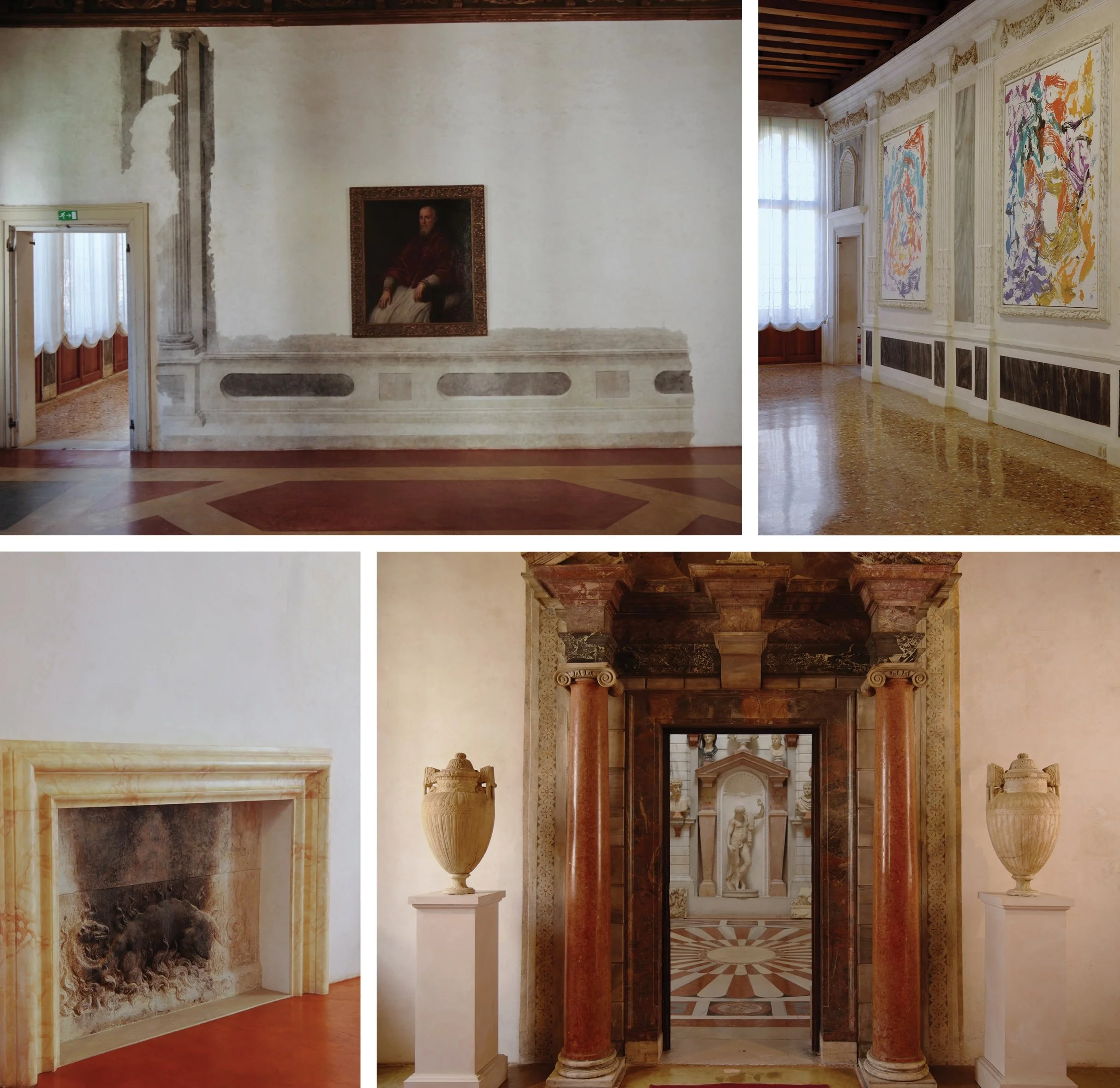
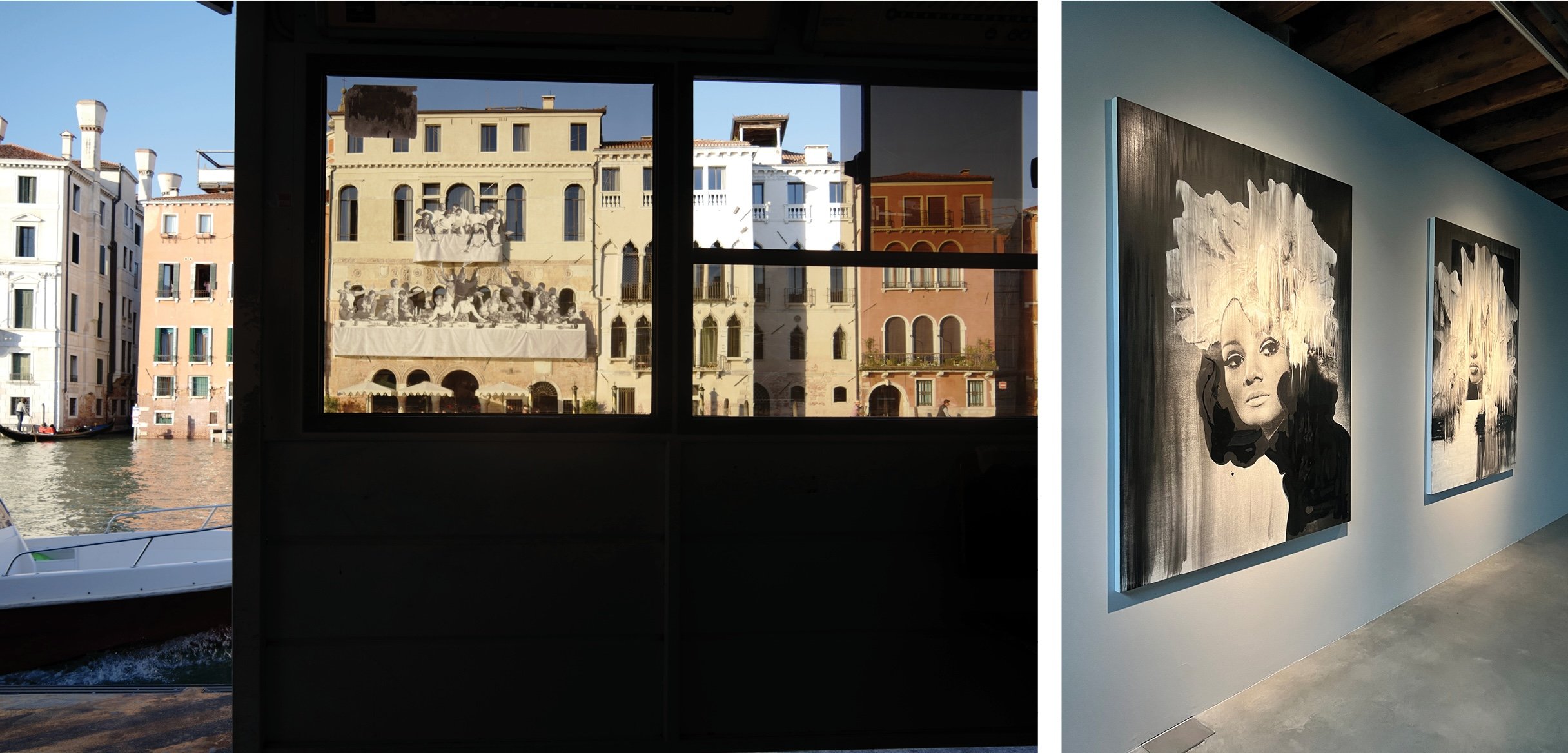
Helter Skelter at Fondazione Prada shows the opposite. Arthur Jafa and Richard Prince are not pressed together by curatorial good intentions; they are allowed to collide. Both are drawn to the American underbelly: its violence, glamour, racism, commerce, seductions, and lies. Jafa exposes the wound. Prince exposes the market that turns wounds into subculture. One sharpens the other. In Prada’s eighteenth-century Ca’ Corner della Regina, grit becomes beautiful without becoming innocent.
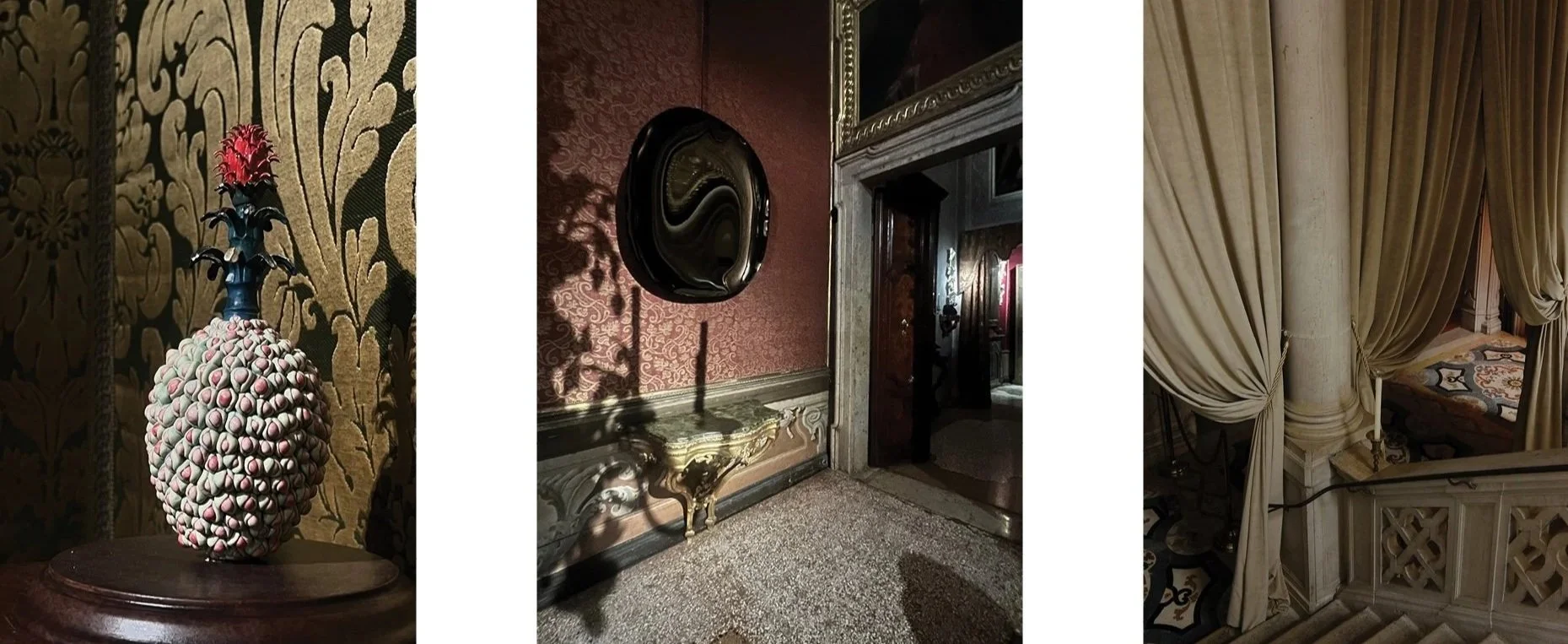
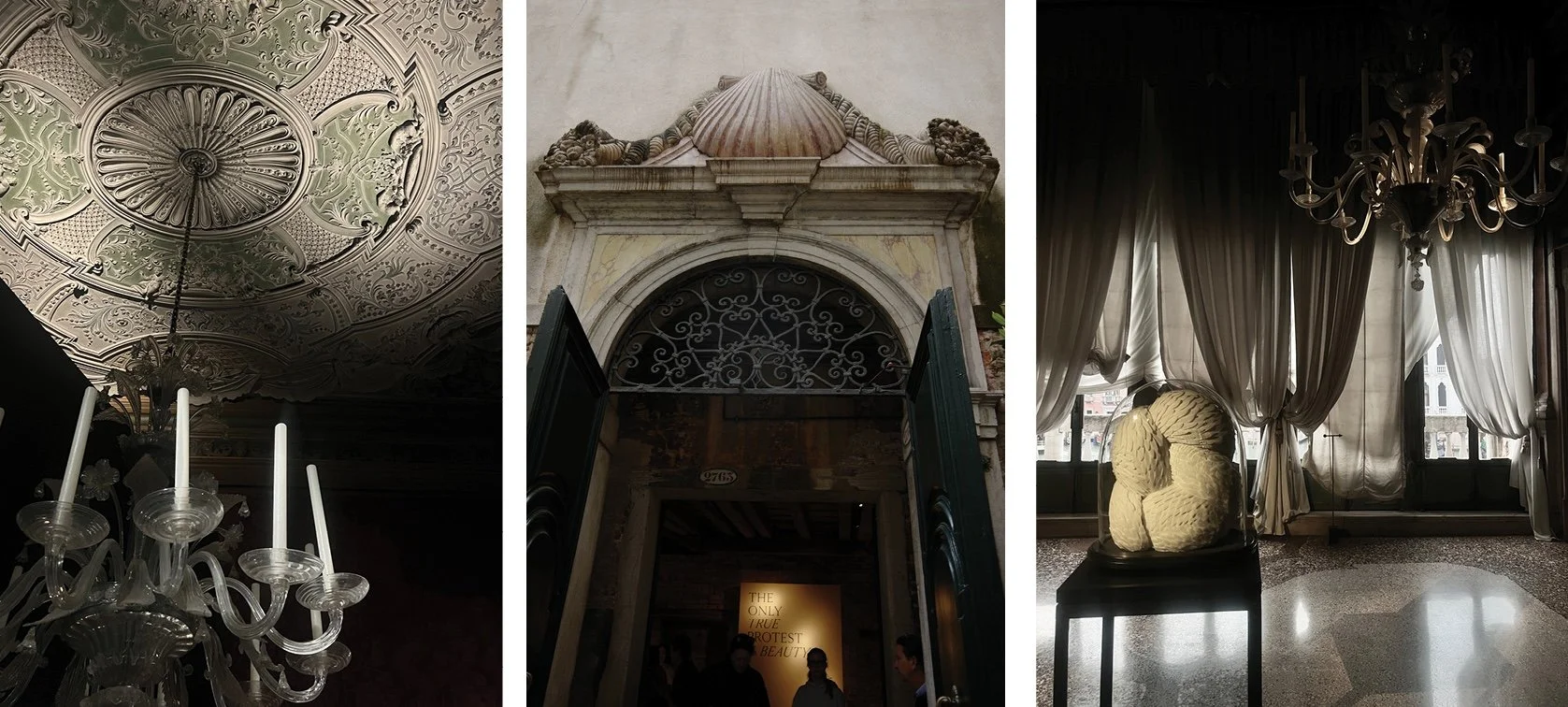
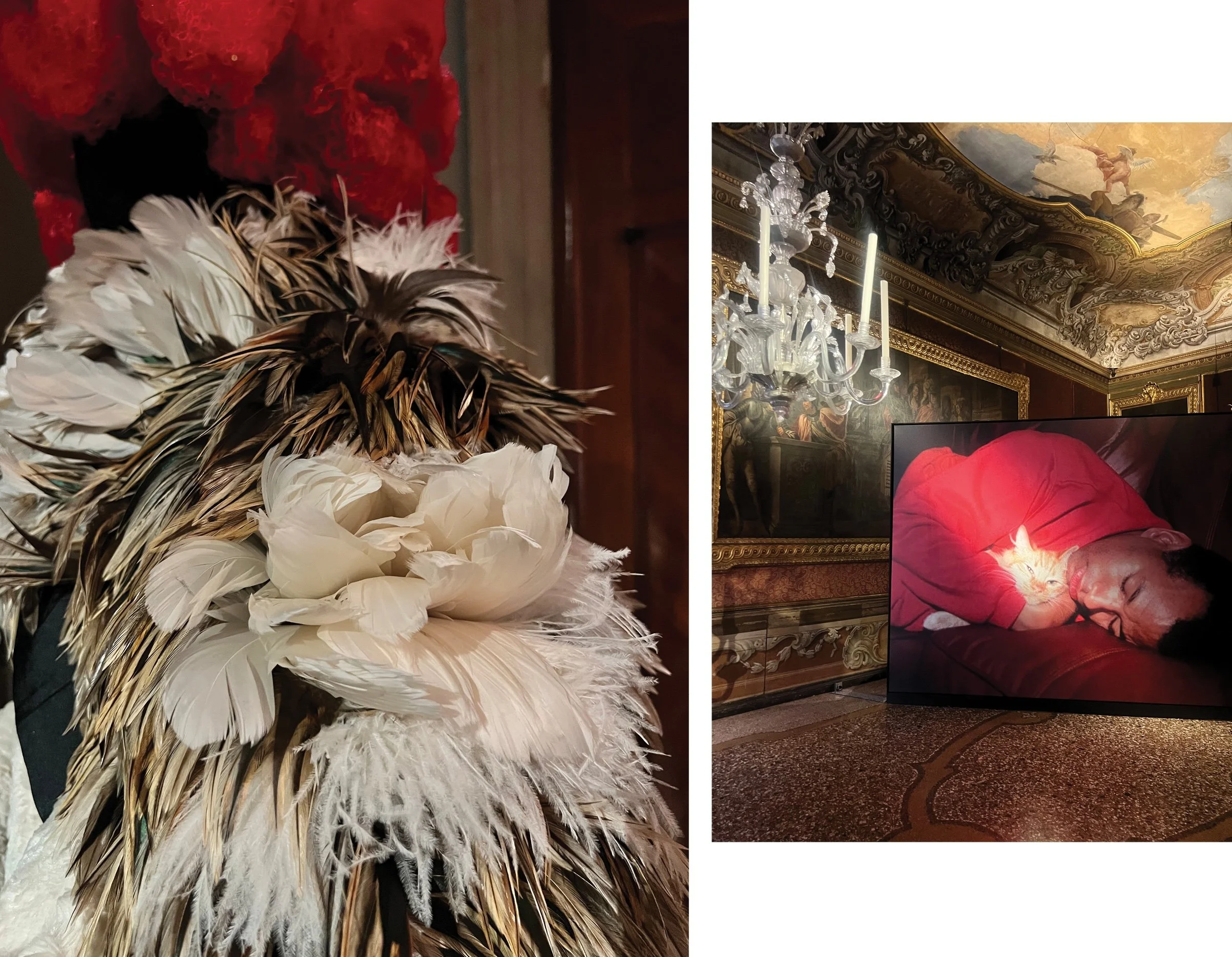
Dries Van Noten “The Only True Protest Is Beauty” exhibitions views
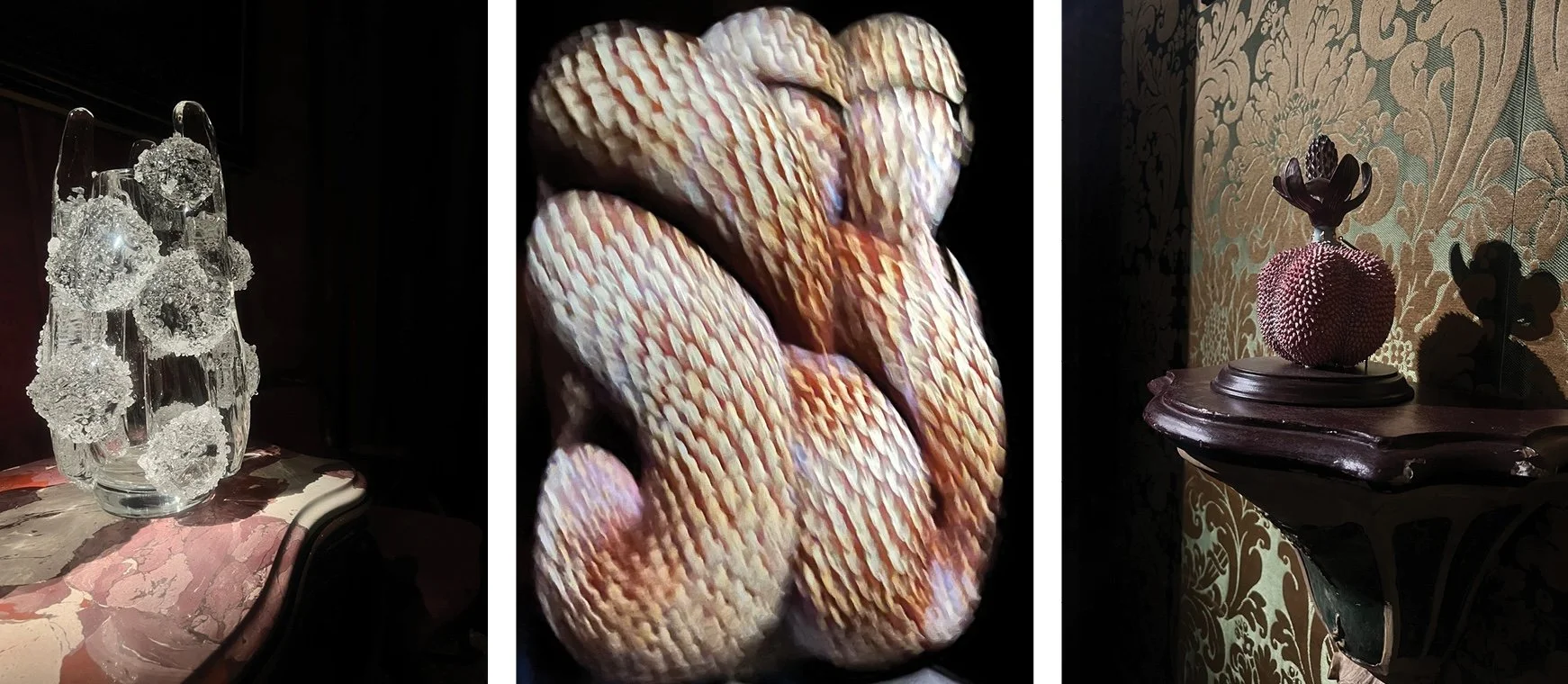
If Helter Skelter has the aesthetic of a blade, Dries Van Noten’s The Only True Protest Is Beauty reveals the discipline required to make a Japanese knife. More than two hundred objects—fashion, jewelry, glass, ceramics, photography—are gathered as a quiet argument for finesse, patience, and obsession. They do not ask to be consumed. They ask to be regarded. What more noble protest than objects not to own, but to behold? Palazzo Pisani Moretta is grand and worn, vibrant and dark, old and charged. A majestic maze for objects balanced between art and craft.
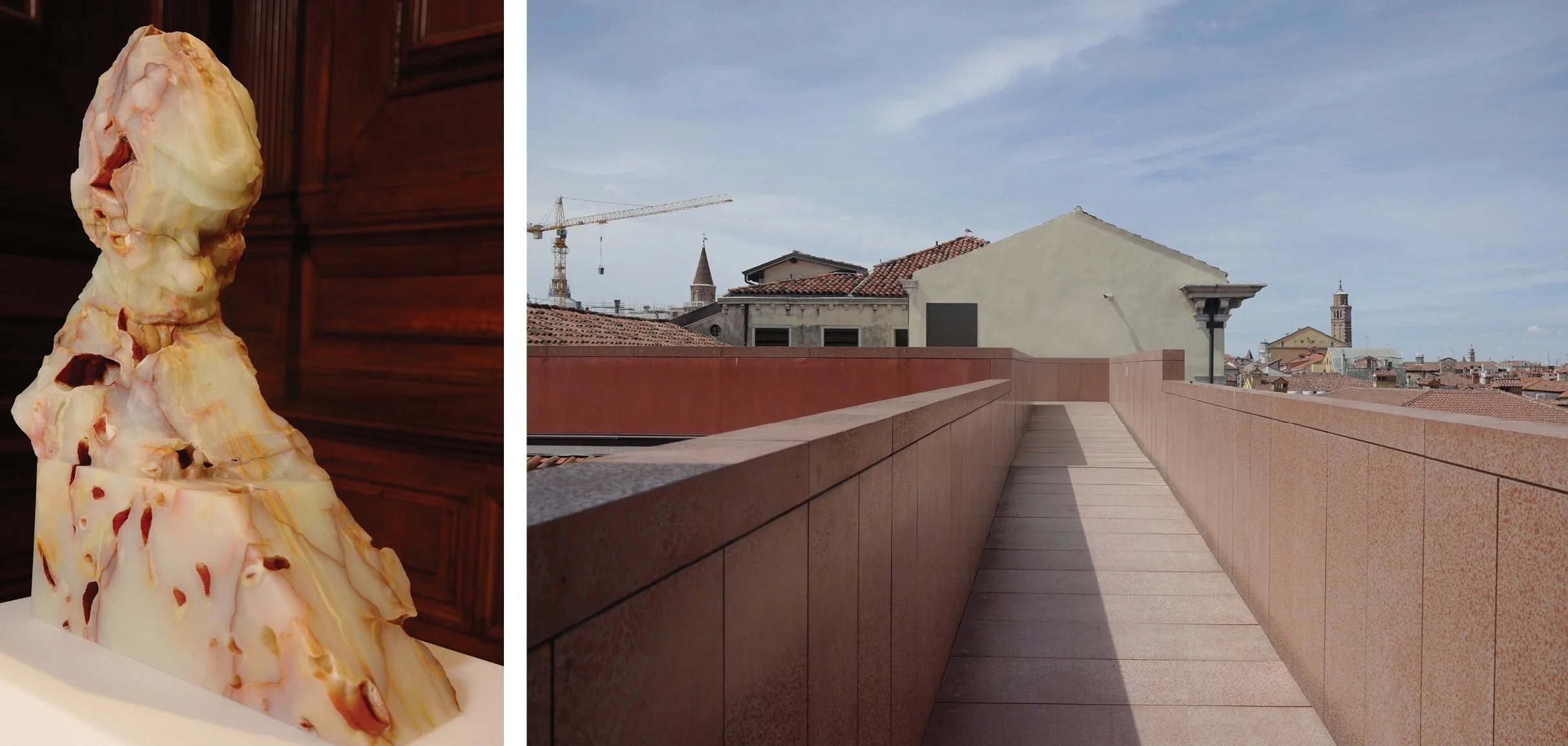
Barry X Ball installation view
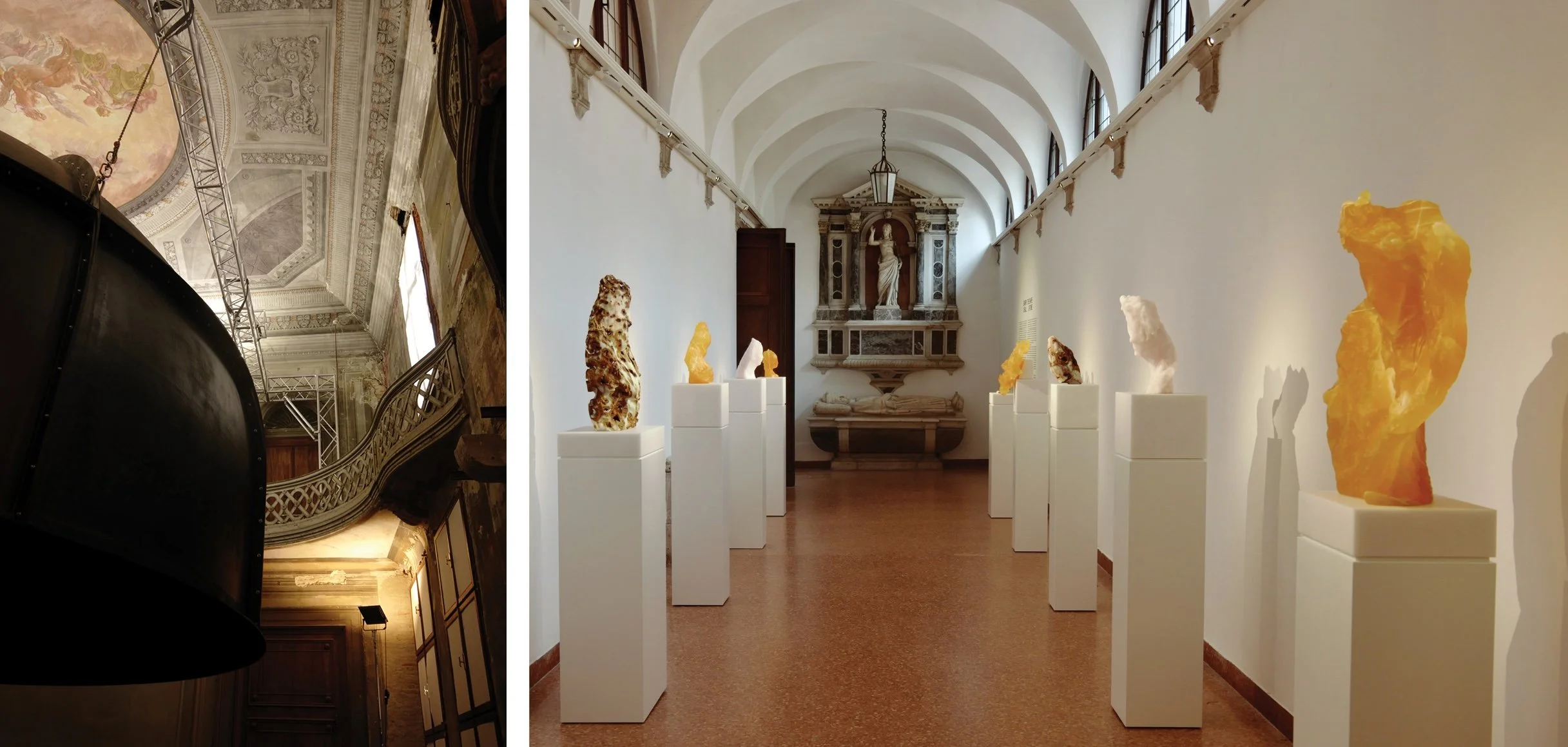
Ai Weiwei’s 2022 The Human Comedy: Memento Mori—a nearly nine-meter chandelier in black Murano glass—filled the sanctuary of the Basilica of San Giorgio Maggiore like a suspended ossuary. Berlinde De Bruyckere’s Archangels in 2024 were sacral, wounded, and transcendent. Both used the Palladian church as an amplifier. Barry X Ball’s The Shape of Time does not. His marble sculptures seem to have been waiting there for centuries. Ball begins with historical masterpieces, submits them to scanning, modeling, distortion, and return, then gives them back to stone and handcraft. The result is sublime without spectacle. His Saint Bartholomew Flayed is beautiful in the old Catholic way: through horror. He wears his own skin like a cloak around his torso.
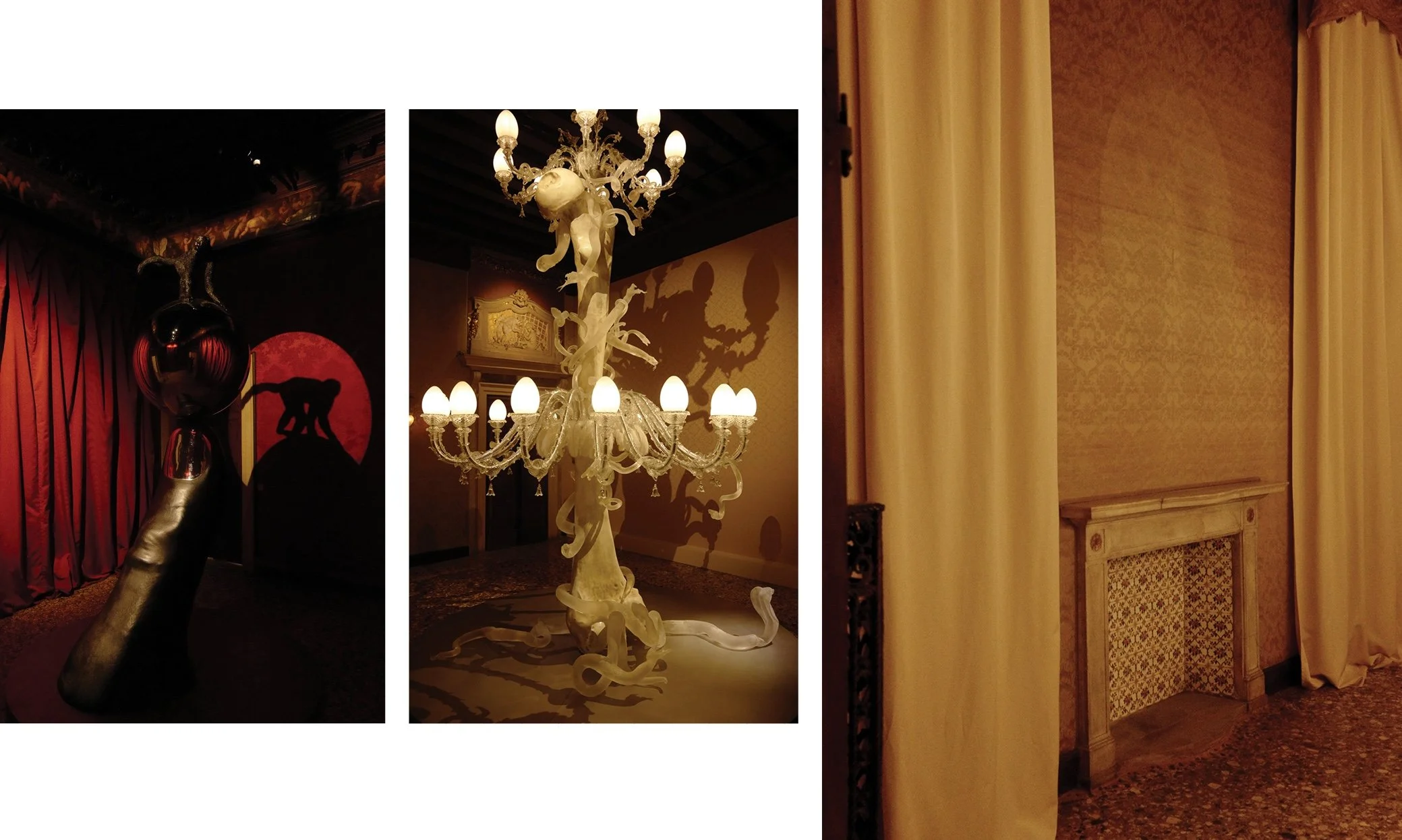
Koen Vanmechelen “We Thought We Were Alone” exhibition views
Have we lost the ability to be astonished before we are instructed? To stand before an object without a briefing. To accept a work first as presence, then as argument. Spontaneous or deliberate. Concrete or conceptual. Figurative or abstract. Before introduction, priming, and the soft coercion of context.
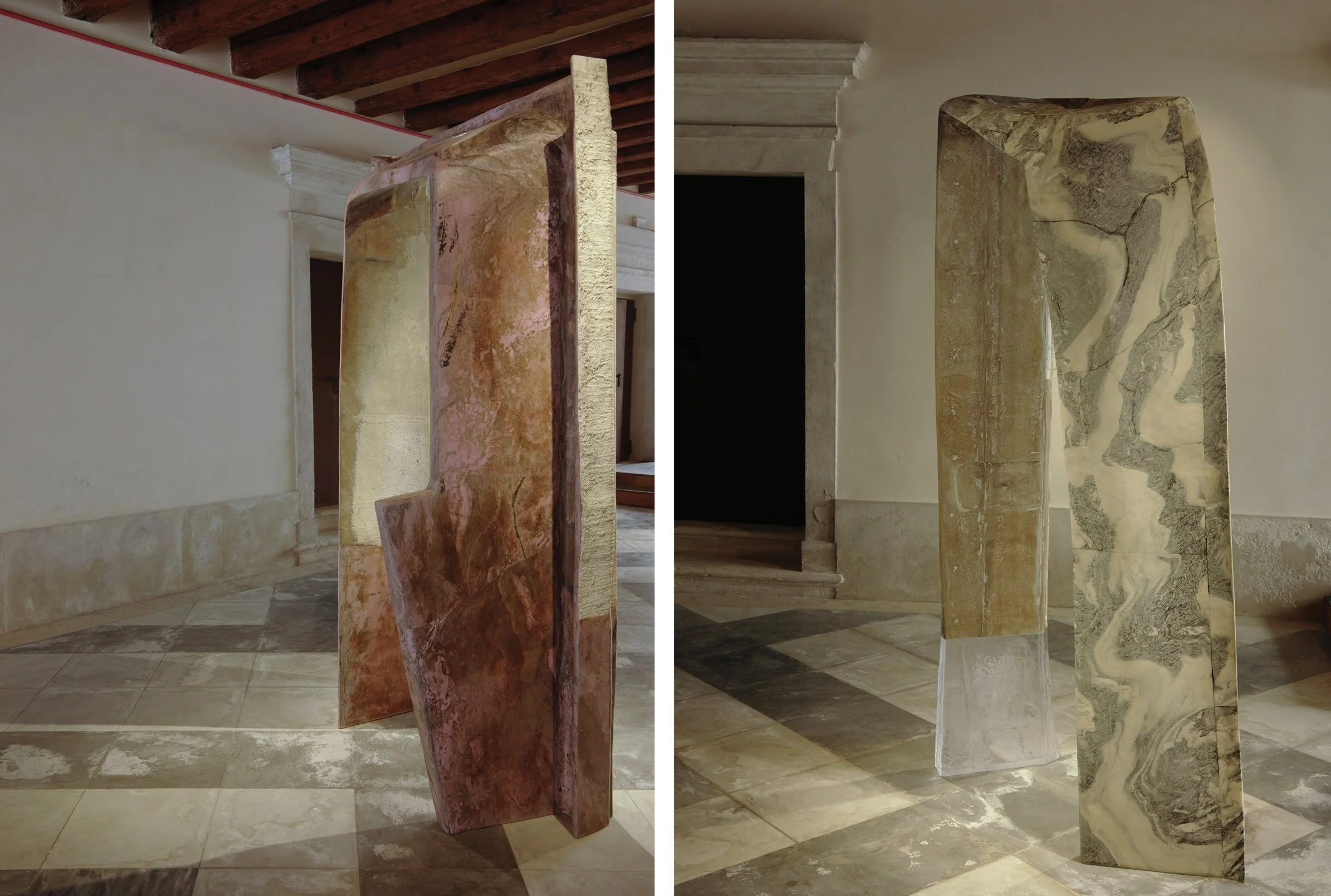
Vicenzo de Cotiis, Untitled 78 & 49
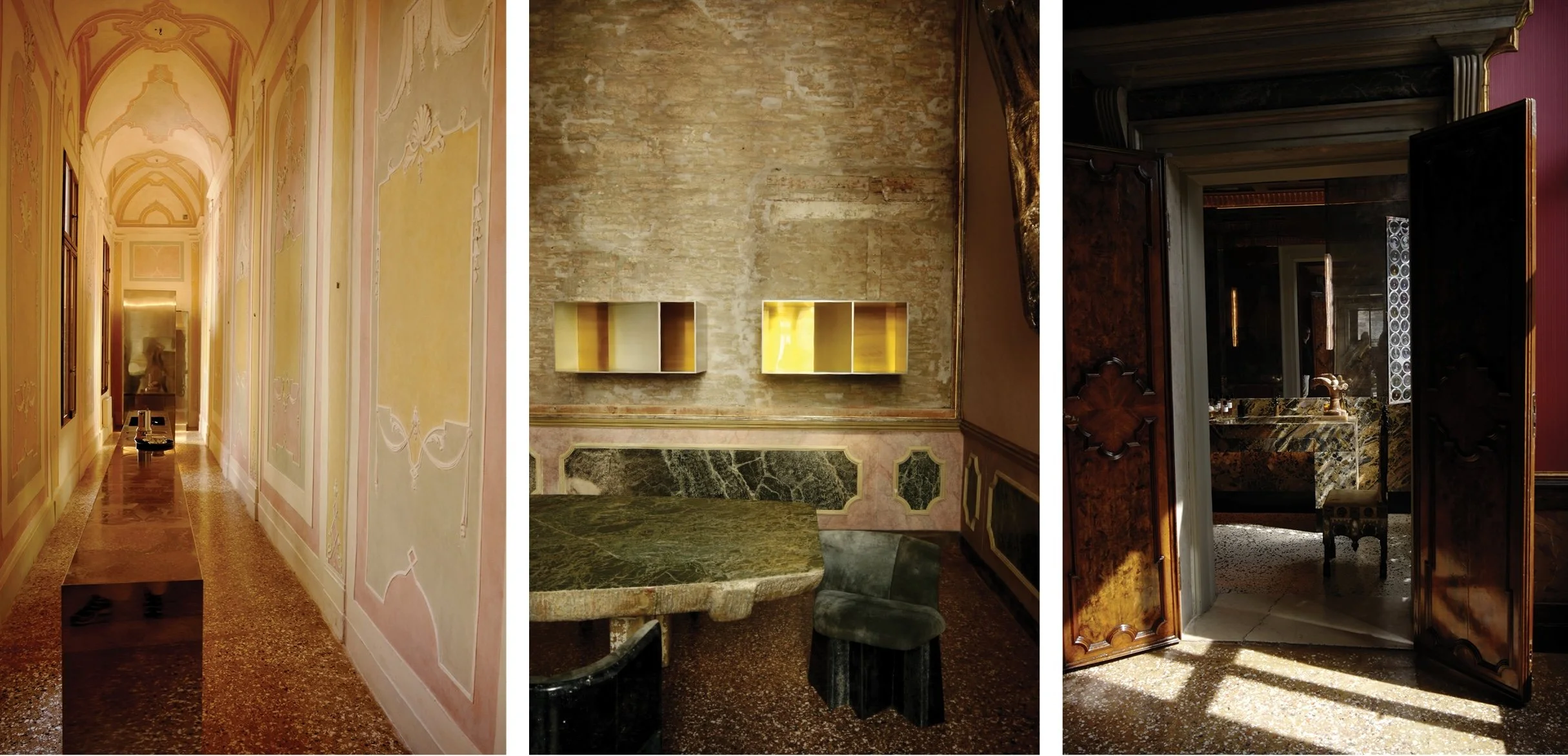
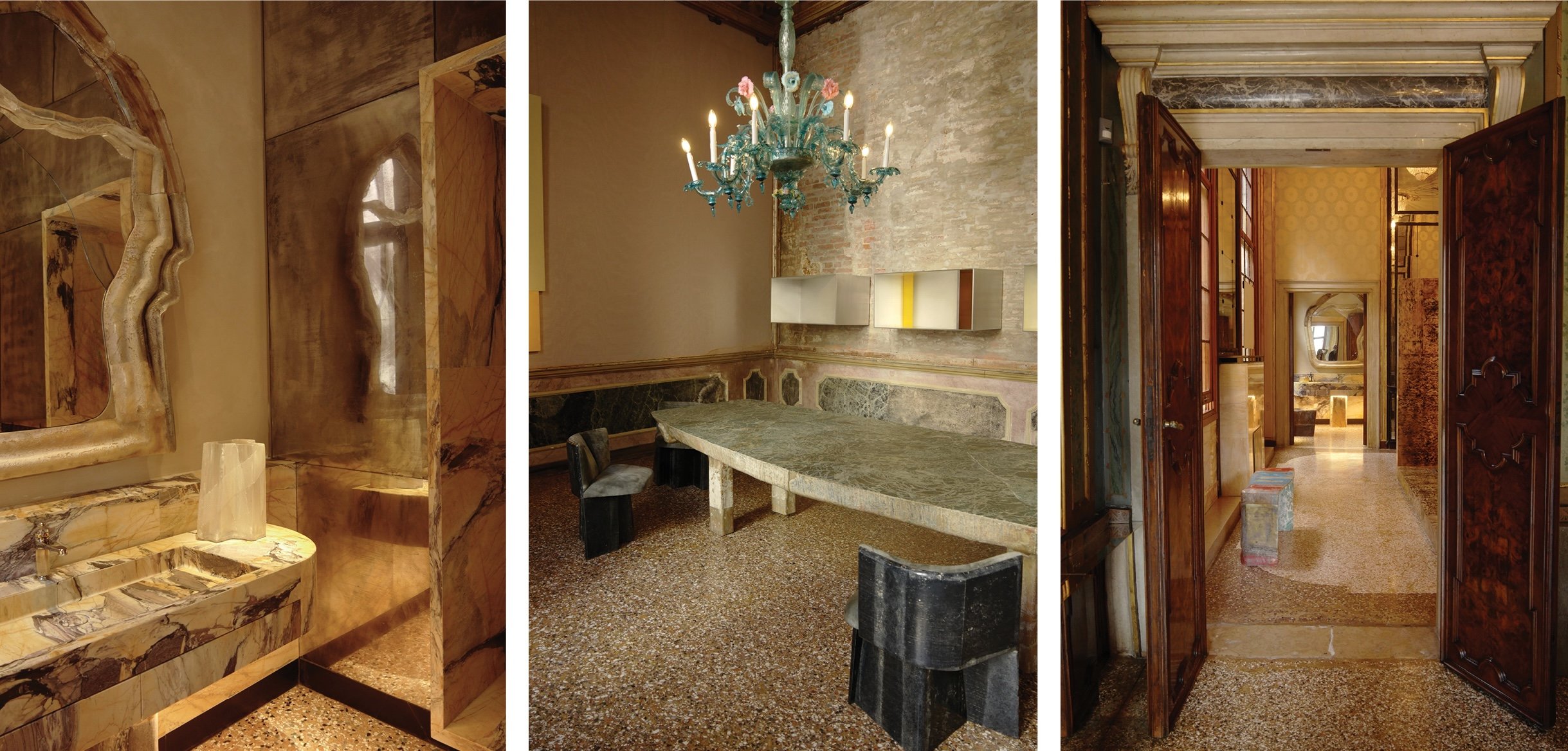
Vicenzo de Cotiis Foundation “Minimal Legends” installation views
Even the most elite exhibitions in Venice now come with explanatory videos. Interesting, certainly. But also restrictive. The magic often disappears into the explanation. Video is more invasive than text: you may ignore a wall panel, but how do you refuse a glowing screen? Curators seem increasingly reluctant to let us meet the work alone. They want to manage the encounter, shape the emotion, narrow the possible readings. Contemporary art, at that moment, reveals itself as another luxury business: not only making things, but controlling the story around them.
Venice, built on water, pageant, and centuries of global trade, recognizes the commerce of contemporary art better than any city.
Ninety euros buys the illusion of history: 30 minutes in a gondola.
Cash is preferred.
Subscribe to get full access to the newsletter and publication archives.
THE ÆSTHETIC NOMADS BLUE BOOK: THE BIENNALE'S MOST STRIKING OFF-SITE EXHIBITIONS
FONDAZIONE PRADA
Helter Skelter, Arthur Jafa and Richard Prince
One of the essential off-site exhibitions of the Biennale season. At Ca’ Corner della Regina, Fondazione Prada brings Arthur Jafa and Richard Prince into a dense, unsettling dialogue on American mythologies: celebrity, violence, race, desire, pulp culture, and the uneasy glamour of decline. It is not an easy pairing, which is precisely why it works. The palazzo gives the exhibition grandeur; the work keeps it dangerous.
fondazioneprada.org/project/helter-skelter-arthur-jafa-richard-prince/
FONDAZIONE DRIES VAN NOTEN
The Only True Protest Is Beauty
At Palazzo Pisani Moretta, Dries Van Noten gathers fashion, ceramics, glass, jewelry, photography, and objects of rare emotional intelligence into an exhibition about beauty as resistance. Not beauty as decoration, but as discipline: the patience of craft, the dignity of material, the quiet force of things made with care. In a city crowded with spectacle, The Only True Protest Is Beauty asks for a slower kind of attention.
fondazionedriesvannoten.org/
At SMAC Venice, Lee Ufan is the antidote to Biennale excess. Presented by Dia Art Foundation inside the restored Procuratie, the exhibition offers no spectacle, no urgency, no demand for instant comprehension. Stone, steel, gesture, and emptiness are allowed to hold the room. After the noise of pavilions and performances, it feels almost radical: art that does not compete for attention but waits for it.
smacvenice.org/whats-on/lee-ufan
PALAZZO GRASSI
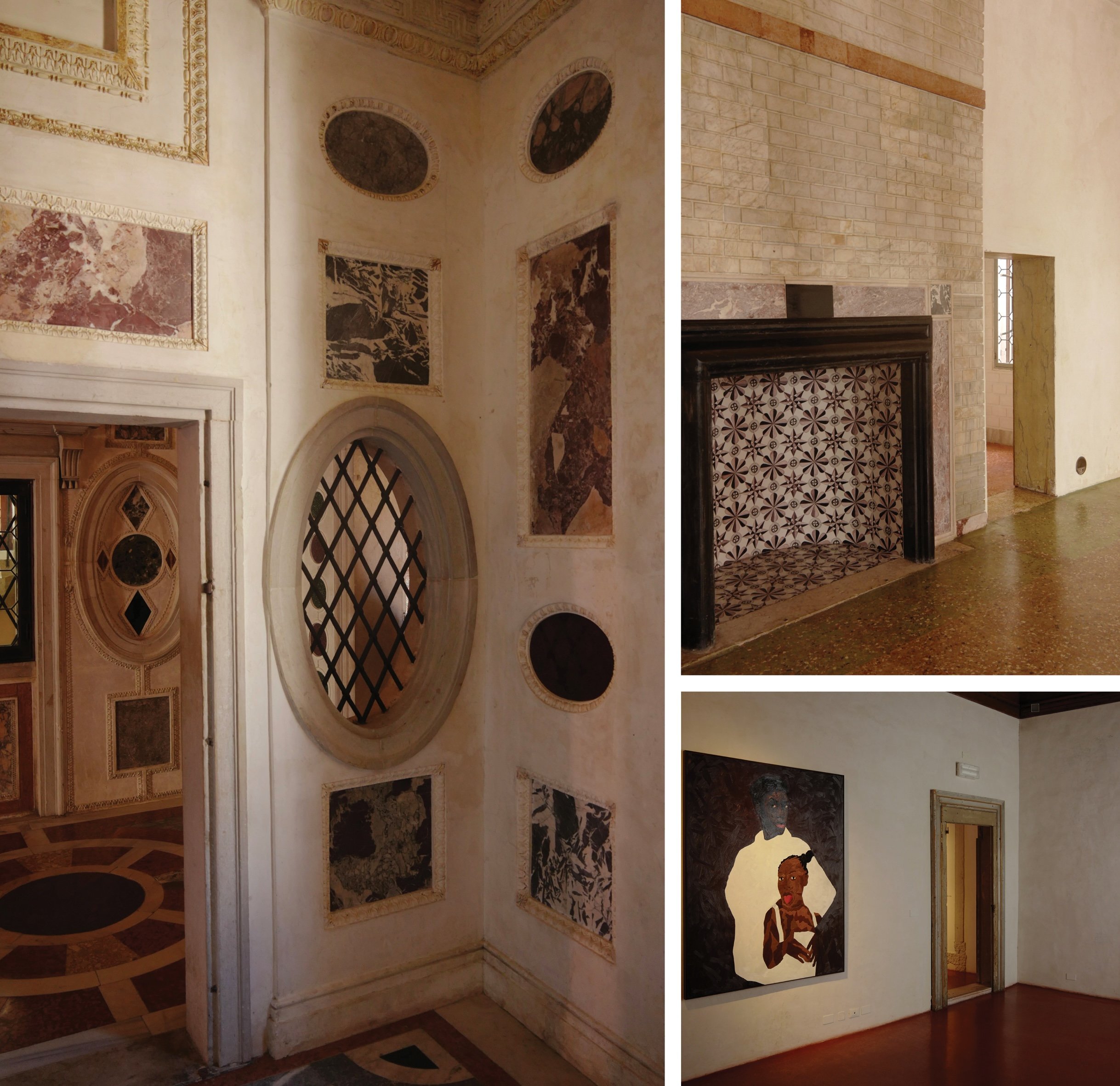
The Promise of Change, Michael Armitage
Palazzo Grassi gives Michael Armitage the scale his paintings deserve. In The Promise of Change, large-format works and drawings from the past decade unfold across the palazzo with restless beauty: East Africa and Europe, politics and mythology, violence and pleasure, all held in the unstable surface of lubugo bark cloth. Armitage paints beauty as a trapdoor. Beneath the colour and sensuality lies a sharper criticism of power, postcolonial inheritance, public violence, ecological fragility, and the fragile promises of political change. The paintings seduce first, then refuse to let the viewer remain innocent.
pinaultcollection.com/palazzograssi/en/michael-armitage-promise-change
PALAZZO ROTA IVANCIC
We Thought We Were Alone, Koen Vanmechelen
Koen Vanmechelen’s We Thought We Were Alone takes shape as an encounter between living memory and ancestral imagination. More than forty new works—animals, bodies, hybrids, and mythic forms—are cast into the historic rooms as if the palazzo itself had summoned them. The exhibition turns architecture into habitat: frescoes, stone, shadow, and patina become part of Vanmechelen’s larger meditation on species, kinship, and the old illusion that humanity stands apart.
wethoughtwewerealone.com/
PALAZZO FRANCHETTI
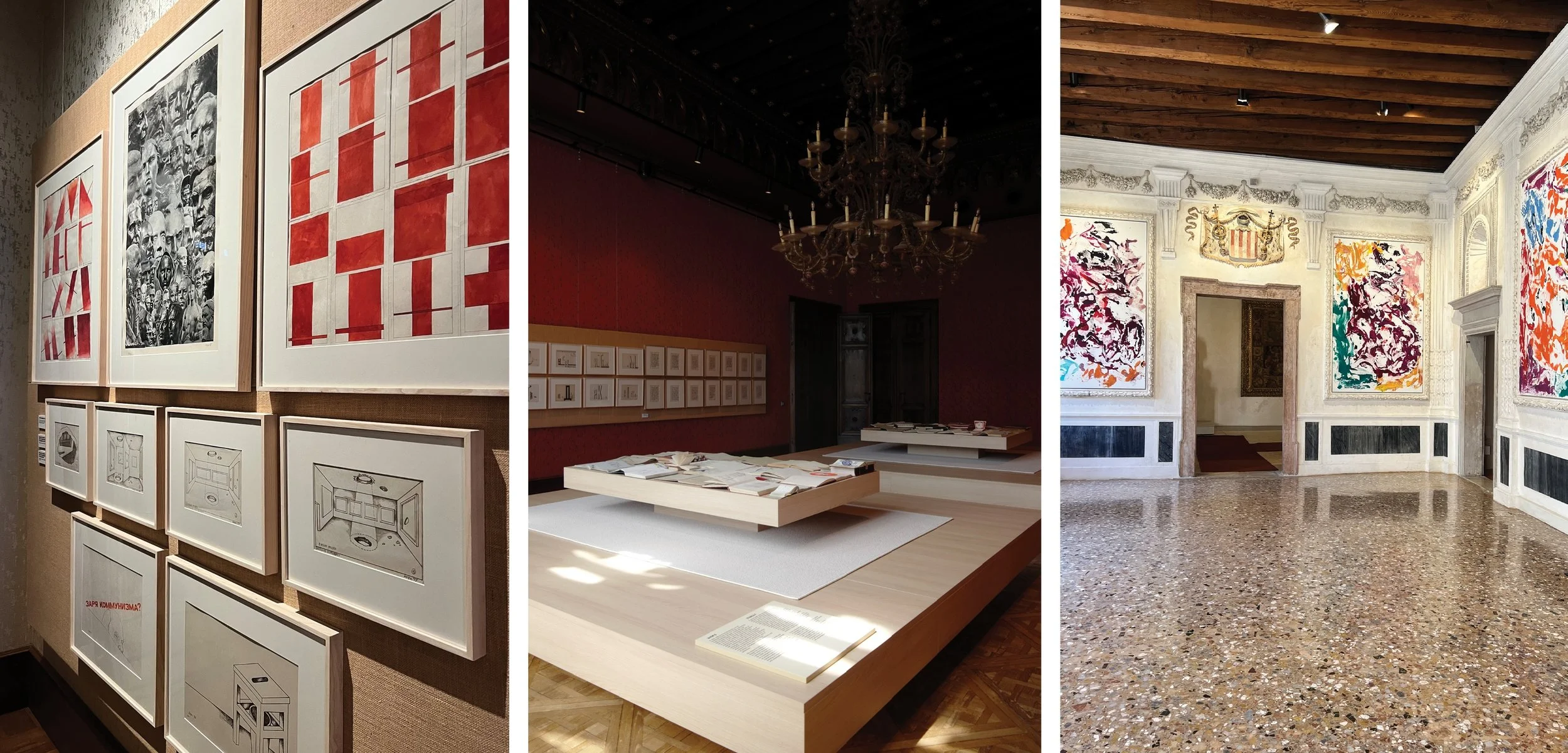
Instruments of the Mind, Vyacheslav Akhunov
Vyacheslav Akhunov’s Instruments of the Mind unfolds as a living archive of memory, censorship, spiritual consciousness, and Soviet afterlife. A founding figure of Central Asian conceptualism, Akhunov works through fragments, symbols, absurdity, bricolage, and historical residue, turning the mind itself into a site of resistance. The exhibition has the quiet force of insistence: universal in its reach and stronger still for having been shaped under the pressure of Soviet censorship.
labiennale.org/en/art/2026/collateral-events/vyacheslav-akhunov-instruments-mind
PUNTA DELLA DOGANA
Third Person, Lorna Simpson
Lorna Simpson’s Third Person cuts through the seductive surface of images. Her collages, paintings, films, and photographic fragments return again and again to Black female presence: obscured, multiplied, withheld, transformed. Faces disappear. Hair becomes archive. Bodies are cropped, doubled, frozen, submerged, or set against fields of ice, water, and sky. Simpson exposes the mechanisms by which race and gender have been framed, consumed, and misread. The image is never innocent. It is evidence, memory, and a quiet form of resistance.
pinaultcollection.com/palazzograssi/en/lorna-simpson-third-person
VICENZO DE COTIIS FOUNDATION
Minimal Legends
At Palazzo Giustinian Lolin, Vincenzo De Cotiis places his own weathered material investigations in dialogue with the severe grace of minimalism. The result is neither furniture showroom nor art-historical exercise, but something more ambiguous: collectible design as archaeology. Fiberglass, stone, metal, glass, patina, and fracture become evidence of time passing through objects. Like Dries Van Noten, De Cotiis works on the threshold between art and craft. But where Van Noten seeks the nobility of touch, De Cotiis finds beauty in erosion, repair, and the imperfect dignity of matter.
decotiis.it